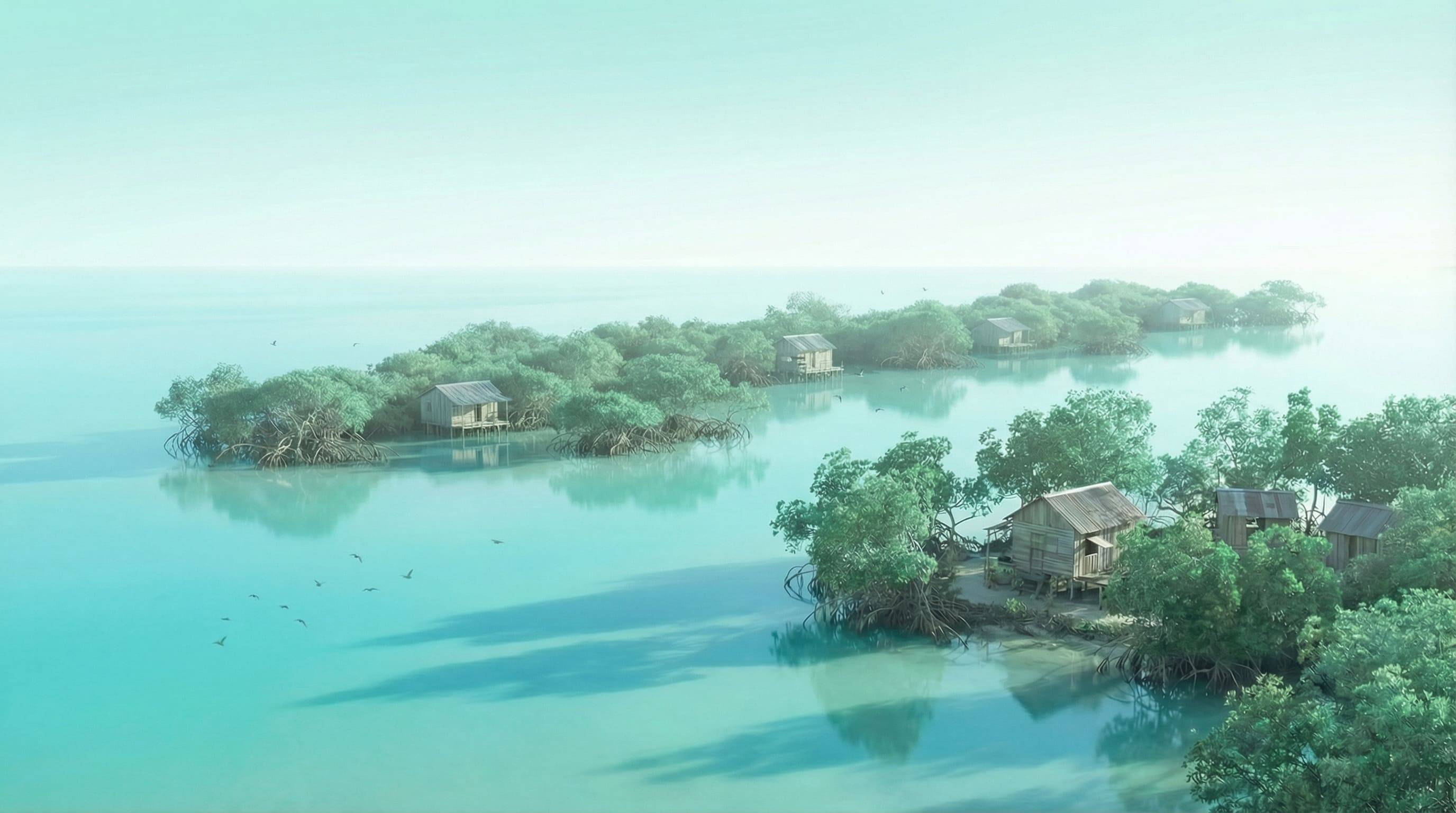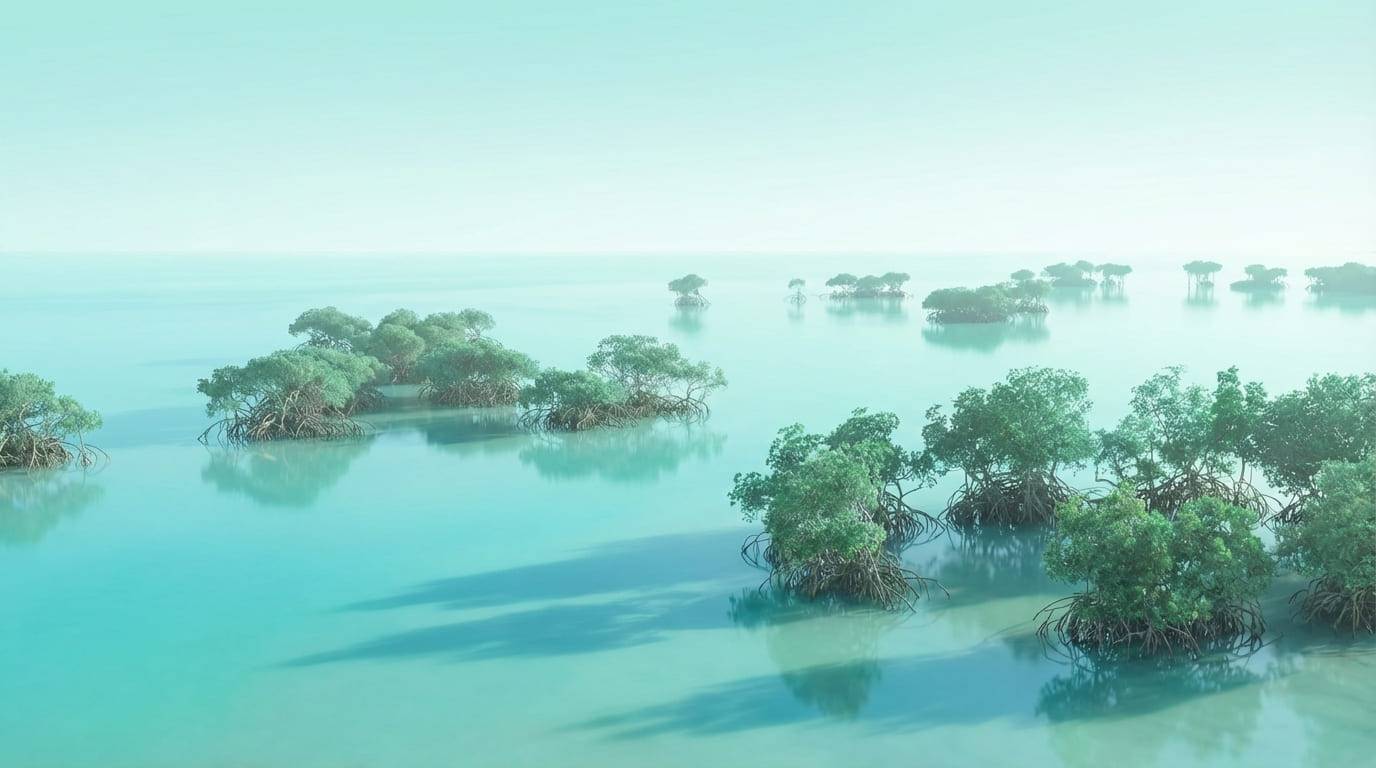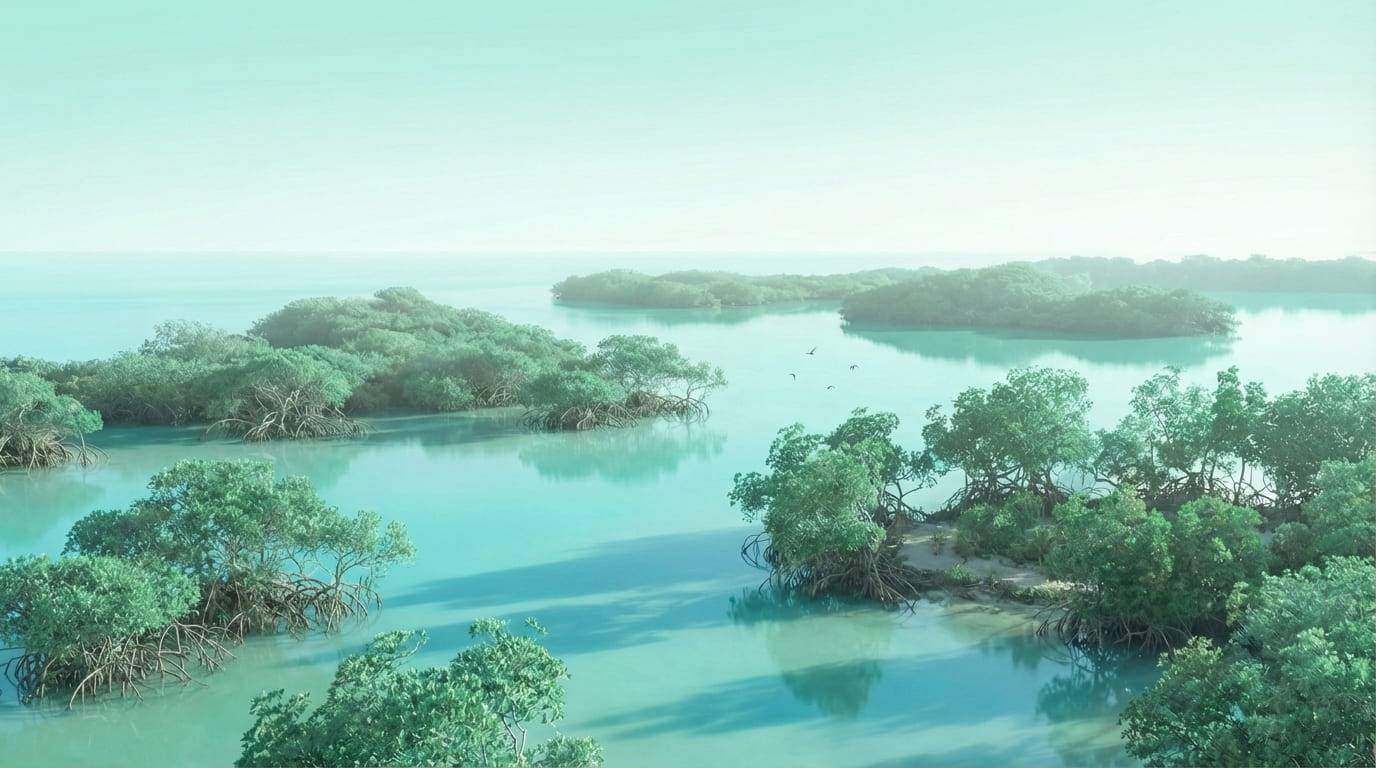
Ocean carbon sinks, known collectively as blue carbon, are the coastal and marine ecosystems that capture and store carbon dioxide: mangroves, seagrass meadows and salt marshes. They matter to business because they sequester carbon per unit area far faster than most forests, and they are emerging as a source of high-integrity carbon credits for companies pursuing net zero.
This article explains what blue carbon is, the science behind it, and the practical opportunities for companies that want to invest credibly.
What is blue carbon?
Blue carbon is the carbon captured by oceans and coastal ecosystems. The key habitats are:
- Mangroves: tropical coastal forests that store large amounts of carbon in their roots and surrounding soils.
- Seagrass meadows: underwater plants that store carbon and provide habitat for marine species.
- Salt marshes: coastal wetlands that accumulate carbon in waterlogged soils.
According to the IUCN and World Resources Institute, these ecosystems can sequester carbon at rates up to around ten times greater than mature tropical forests on a per-area basis, and store several times more carbon per hectare, making them exceptionally efficient carbon sinks.
Why ocean carbon sinks matter
- Climate change mitigation: by storing large carbon stocks, these ecosystems help slow the rise of atmospheric CO2. See our glossary entry on climate change mitigation.
- Biodiversity: mangroves, seagrass beds and marshes support fisheries, nurseries and migratory species.
- Coastal protection: healthy mangroves and marshes buffer coastlines against storms and erosion.
- Livelihoods: coastal communities depend on these ecosystems for fisheries and tourism.
The science behind ocean carbon sequestration
Through photosynthesis, marine plants convert dissolved CO2 into organic matter. A portion is buried in sediment, where the low-oxygen conditions slow decomposition and lock carbon away for centuries or longer. When these ecosystems are cleared or degraded, that stored carbon can be released back into the atmosphere, which is why protecting existing habitats is as important as restoring new ones.
Business opportunities in blue carbon
Carbon credits and offsets
Companies can invest in blue carbon projects such as mangrove or seagrass restoration to generate carbon credits that neutralise residual emissions. Projects certified under standards such as the Verified Carbon Standard (VCS) or the Gold Standard provide greater transparency and credibility.
Sustainable tourism
Restored coastal ecosystems attract responsible tourism and education programmes, letting businesses generate revenue while preserving habitats.
Sustainable fisheries
Restoration projects can rebuild fish populations, benefiting commercial fisheries and giving seafood businesses a more resilient supply.
Coastal resilience services
Insurers and developers increasingly recognise that protecting mangroves and marshes reduces storm-surge damage, and may fund restoration as natural infrastructure to lower losses.
Monitoring technology
Satellite monitoring, remote sensing and AI-driven analytics enable more precise measurement of carbon stored in marine environments, a service area for data and software providers supporting governments, NGOs and investors.
Key challenges
- Complex ecosystems: mangroves and seagrasses are sensitive to salinity, pollution and temperature, complicating large-scale restoration.
- Regulatory gaps: many countries still lack clear frameworks for recognising and trading blue carbon credits.
- Measurement: quantifying carbon in sediments and plants is technically demanding.
- Community engagement: durable projects depend on local stakeholders whose livelihoods rely on coastal resources.
What blue carbon restoration looks like in practice
In tropical regions such as Southeast Asia, restoration typically involves replanting mangroves in degraded coastal areas in partnership with local fishing communities. Well-designed projects pair carbon finance with co-benefits: breeding grounds for fish and shrimp, additional local income, and greater resilience to storms and rising sea levels. Government support, NGO expertise and rigorous verification are what separate durable projects from those that fail or over-claim.
The role of policy and collaboration
Scaling blue carbon depends on collaboration between governments, NGOs and the private sector. Initiatives such as the Blue Carbon Initiative, co-organised by the Intergovernmental Oceanographic Commission, Conservation International and the IUCN, and the Global Mangrove Alliance, a network of conservation organisations, drive policy and best practice. Public and philanthropic funding often starts projects, with private capital enabling expansion.
Steps for business engagement
- Identify high-impact locations: work with experts to find sites with strong sequestration and biodiversity potential.
- Build partnerships: collaborate with NGOs, communities and scientific institutions.
- Secure certification: validate projects through recognised offset standards.
- Report honestly: include verified metrics in sustainability reporting, separating removals from reductions.
Frequently asked questions
Is blue carbon better than forest carbon?
Coastal ecosystems store carbon faster per unit area than most forests, but they cover far less land. Both are needed, and the priority is always to cut emissions first and use high-quality removals for the remainder.
Are blue carbon credits reliable?
Quality varies. Credits certified under recognised standards with strong measurement and community safeguards are more credible than uncertified projects.
To set the emissions baseline that any offset strategy should follow, measure your footprint with Manglai's carbon footprint software.