A carbon footprint is the total amount of greenhouse gases (GHGs) emitted directly or indirectly by an entity, product, service or event throughout its life cycle. It is expressed in tonnes of carbon dioxide equivalent (tCO₂e), a unit that lets the climate impact of different gases be compared on the basis of their global warming potential.
Greenhouse gases and the greenhouse effect
GHGs such as carbon dioxide (CO₂), methane (CH₄) and nitrous oxide (N₂O) trap heat in the atmosphere and raise global temperatures. This greenhouse effect is natural and essential for life, but its intensification by human activity is accelerating climate change.
Why measuring the carbon footprint matters
- Understanding the impact: it identifies the main emission sources and quantifies their contribution to climate change.
- Setting reduction targets: it provides the baseline for goals aligned with international agreements and national policies.
- Implementing mitigation: it reveals opportunities to cut emissions through energy efficiency, renewable energy and better resource management.
- Strengthening reputation: it lets companies demonstrate their commitment to sustainability and meet growing stakeholder expectations.
Carbon footprint scopes
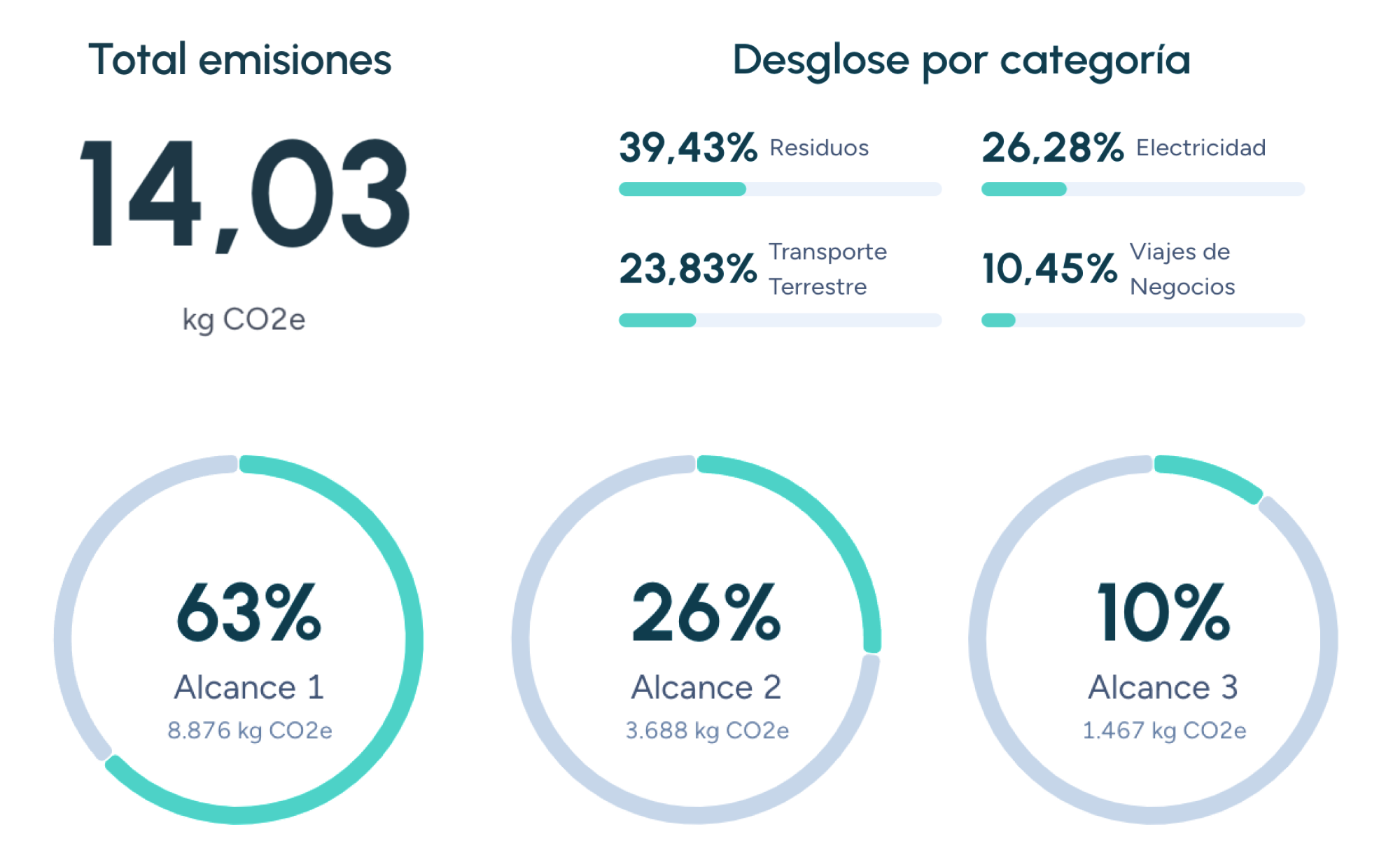
The Greenhouse Gas Protocol, the most widely recognised international standard, defines three scopes:
Scope 1: direct emissions
GHG emissions from sources owned or controlled by the entity, such as fuel combustion in its facilities or vehicles. See Scope 1 emissions.
Scope 2: indirect emissions from energy
Emissions associated with the generation of the electricity, heat or steam purchased and consumed by the entity. See Scope 2 emissions.
Scope 3: other indirect emissions
All other indirect emissions across the value chain, including the supply chain, transport and distribution, business travel, product use and end-of-life. See Scope 3 emissions.
Measuring these scopes is the starting point for any credible reduction strategy. At Manglai we help companies measure their carbon footprint and prepare their sustainability reporting. Discover how Manglai can help you.
Manglai Newsletter
Regulatory updates and product news, once a month.
Companies that trust us















Related terms
See all termsCarbon accounting
The process of measuring, calculating and recording the greenhouse gas emissions of an organisation or product, the foundation of any credible climate strategy.
Carbon audit
A carbon audit is the structured process of measuring, analysing and verifying an organization's greenhouse gas emissions across Scopes 1, 2 and 3, expressed in CO2e.
Carbon budget
The carbon budget is the total amount of CO2 that can still be emitted while keeping global warming below a set limit, such as 1.5°C above pre-industrial levels.