Climate risk refers to the potential adverse effects of climate change on natural and human systems. For organizations, these risks are usually grouped into two broad categories: physical risks, such as extreme weather and rising sea levels, and transition risks, linked to the shift toward a low-carbon economy. Understanding climate risk is essential for companies to act, reduce their impact, and adapt to an uncertain future.
Types of climate risk
Physical risks
Physical risks arise directly from a changing climate and are usually split into two types:
- Acute risks: extreme weather events such as hurricanes, floods, droughts, and wildfires, which cause immediate damage.
- Chronic risks: gradual shifts such as rising sea levels, higher average temperatures, and ocean acidification, which cause long-term effects.
Transition risks
Transition risks stem from the effort to mitigate climate change and move to a low-carbon economy:
- Policy and legal risks: changes such as carbon pricing or stricter emission regulations.
- Technology risks: rapid advances in clean technology that make existing assets obsolete (stranded assets).
- Market risks: shifts in demand, such as a decline in fossil fuel consumption.
- Reputational risks: damage to a company's reputation from climate inaction or high carbon exposure.
Scenario analysis
Scenario analysis is the central tool for assessing climate risk over time. It examines how a business would perform under different warming pathways, for example a trajectory consistent with 1.5 degrees Celsius against a high-emissions one, and estimates the anticipated financial effects of physical and transition risks over the short, medium and long term. It is an explicit requirement of both IFRS S2 and the European climate standard ESRS E1.
How climate risk is disclosed
Investors and regulators increasingly expect companies to assess and disclose climate risk. The widely used physical-versus-transition framework was popularised by the Task Force on Climate-related Financial Disclosures (TCFD). The TCFD was disbanded in October 2023 and its recommendations have been taken forward by the IFRS Foundation through the climate disclosure standard IFRS S2. It is no longer a live, standalone framework that companies sign up to.
In the EU, climate risk disclosure is embedded in the CSRD through the ESRS and a double materiality assessment. The delegated act with the revised ESRS was adopted on 3 July 2026 and cuts more than 60% of the mandatory datapoints; it applies to financial years starting on or after 1 January 2027, with early adoption possible for 2026. Climate remains the most developed part of the standard.
The role of carbon footprint measurement
Measuring the carbon footprint, the greenhouse gas emissions of an organization, product, event, or individual, is a fundamental step in managing climate risk. It enables companies to:
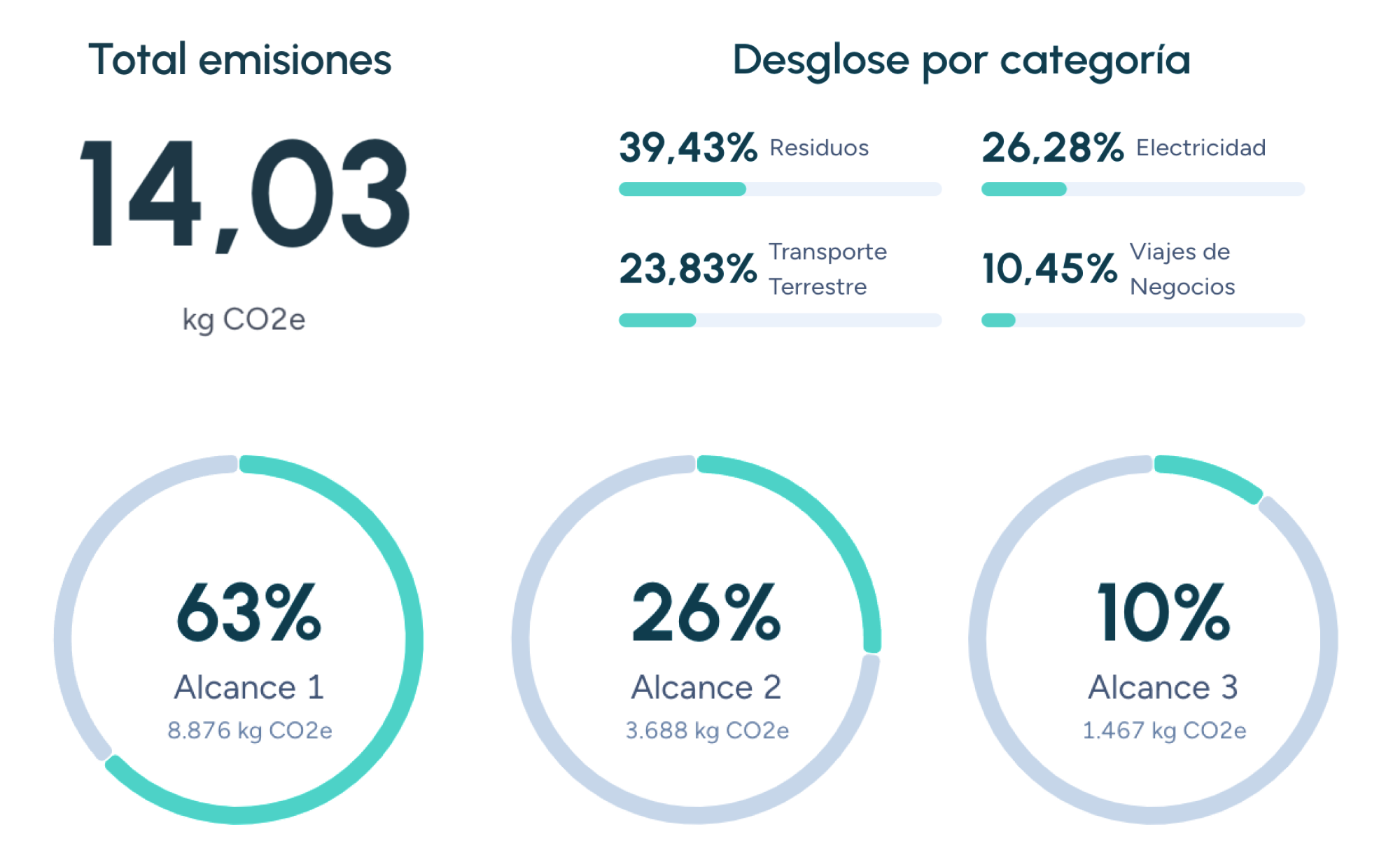
- Identify and quantify emission sources across Scope 1, Scope 2, and Scope 3, helping to prioritise action.
- Assess exposure: a high carbon footprint can signal greater vulnerability to policy, technology, and market risks.
- Set reduction targets against a clear baseline.
- Implement mitigation strategies and track progress toward net zero.
- Communicate performance transparently to build stakeholder trust.
Regulatory and legal framework
International agreements such as the Paris Agreement and national laws such as Spain's Climate Change and Energy Transition Law 7/2021 set the frameworks for climate action and risk management. These policies promote the measurement and reduction of emissions and the disclosure of climate-related information.
Understanding and managing climate risk, alongside mitigation and adaptation, is essential for building a resilient and sustainable business. Manglai helps companies measure their carbon footprint and prepare their sustainability reporting.
Manglai Newsletter
Regulatory updates and product news, once a month.
Companies that trust us















Related terms
See all termsConstruction and demolition waste (CDW)
A guide to construction and demolition waste (CDW): what it is, how it is managed in Spain, the regulation that governs it and its role in the circular economy.
Consumptive Use of Water
Consumptive use is the share of withdrawn water that leaves a basin for good, through evaporation, incorporation into products or transfer, and is the part that truly reduces local availability.
Corporate Water Neutrality
Corporate water neutrality means a company first reduces its water footprint and then replenishes the remaining volume through verified projects in the basins it affects.