Double materiality is an analytical approach that identifies and assesses the relationship between a company's impacts on sustainability and the risks and opportunities that sustainability creates for the company itself. It is the cornerstone of the EU's Corporate Sustainability Reporting Directive (CSRD) and answers two questions:
- Impact materiality: how do the company's operations affect the environment and society?
- Financial materiality: how do environmental and social factors affect the company's financial health and long-term development?
A topic is reportable if it is material from either perspective. This broader lens is what distinguishes double materiality from the single (financial-only) materiality used in some other frameworks. For a wider discussion of the concept, see materiality in sustainability and the related double materiality analysis.
Impact materiality
This dimension focuses on how the company affects the outside world. It includes issues such as:
- Greenhouse gas emissions and climate change
- Water use and pollution
- Human rights in the supply chain
- Effects on local communities
Financial materiality
This looks at how environmental and social issues affect the company itself, covering:
- Risks such as climate change, resource scarcity, regulatory shifts and changing consumer demand.
- Opportunities such as clean technology, access to new markets and a stronger reputation.
A practical example
Consider a food and beverage manufacturer that relies on irrigated crops. From the impact side, its water abstraction and emissions affect local water availability and the climate, which are material to society. From the financial side, growing water scarcity and a possible carbon price threaten its supply costs and continuity, which are material to the business. The same topic, water, is therefore material in both directions, and double materiality requires the company to report on both.
Double materiality and carbon footprint measurement
Measuring the carbon footprint is a core part of any double materiality assessment, because emissions are material from both perspectives. A robust assessment should cover:
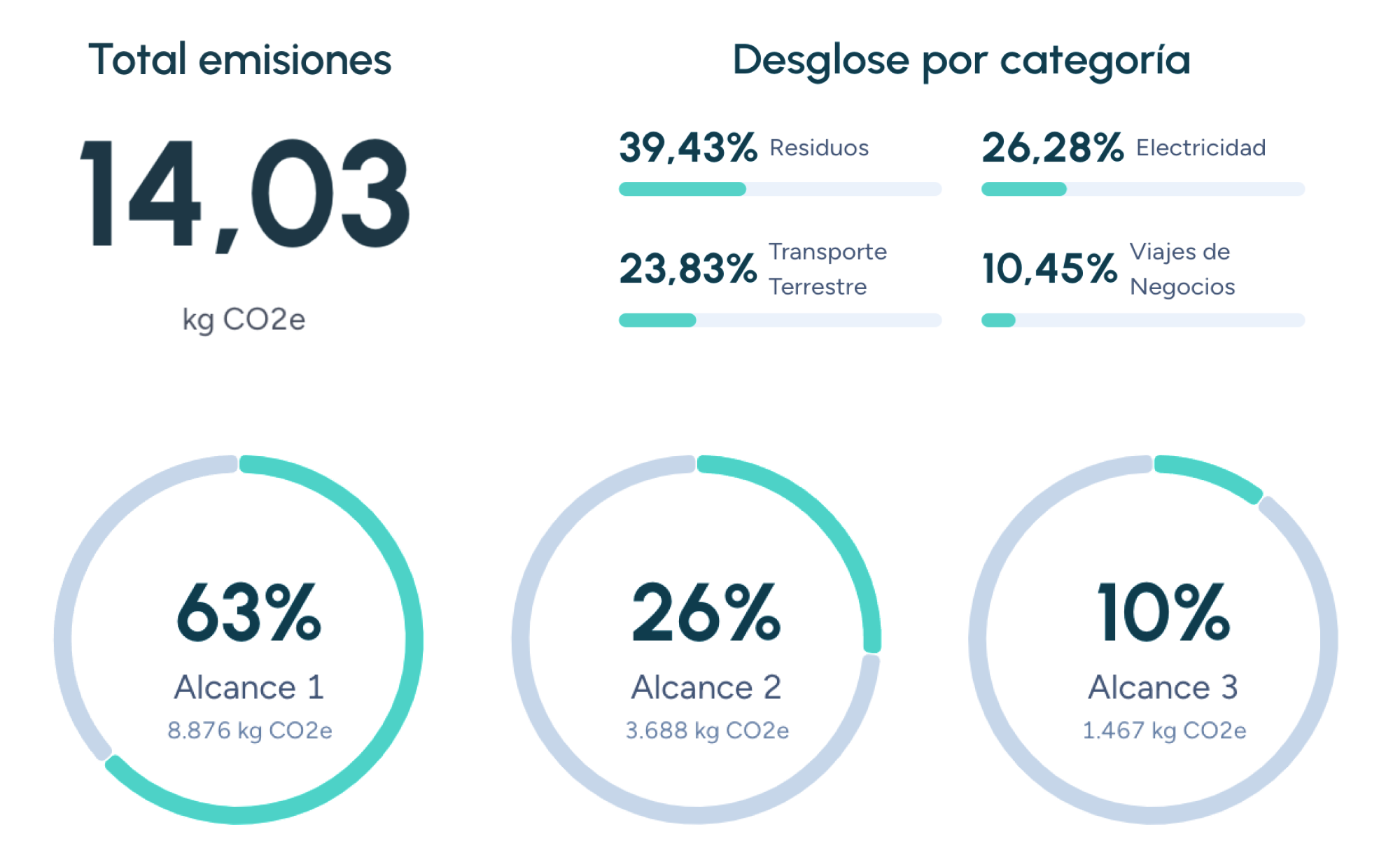
- Scope 1 and Scope 2 direct and energy-related emissions.
- Scope 3 value-chain emissions, from raw material sourcing to product use and end of life.
Quantifying emissions lets a company identify reduction opportunities, evaluate financial risks such as carbon pricing and energy volatility, and respond to investor and customer demands for transparency. See also impact assessment in the CSRD.
Double materiality, the CSRD and the ESRS
The CSRD embeds double materiality at its core and operationalises it through the European Sustainability Reporting Standards (ESRS), which require companies to disclose both how they affect people and the planet and how sustainability affects the business. Importantly, the 2026 Omnibus simplification package narrowed which companies must report and is reducing the number of mandatory datapoints, but it keeps double materiality as the foundation of the framework. The principle therefore remains central even as reporting requirements are streamlined.
Benefits of applying double materiality
- Better risk and opportunity management and greater long-term resilience.
- Stronger investor trust and improved access to sustainable finance.
- Enhanced reputation through credible, transparent disclosure.
- A driver of innovation in products, services and business models.
- Regulatory compliance with the CSRD and ESRS.
Adopting a double materiality lens helps companies comply with EU rules while positioning themselves for the transition to a low-carbon economy. At Manglai we help companies run their double materiality assessment, measure their carbon footprint and prepare CSRD-aligned reporting. Discover how Manglai can help you.
Manglai Newsletter
Regulatory updates and product news, once a month.
Companies that trust us















Related terms
See all termsDouble materiality analysis
Double materiality analysis assesses both a company's impact on the environment and society and how sustainability factors affect the company itself. It is the cornerstone of the CSRD.
EDGE Certification
EDGE is a fast, affordable green building certification from IFC (World Bank Group) that requires at least 20% savings in energy, water and the energy embodied in materials, designed especially for emerging markets.
EFRAG (European Financial Reporting Advisory Group)
EFRAG is the technical body that advises the European Commission and develops the European Sustainability Reporting Standards (ESRS) that underpin the CSRD.