The European Sustainability Reporting Standards (ESRS) are the set of standards that define what sustainability information companies must disclose under the EU's Corporate Sustainability Reporting Directive (CSRD). Developed by EFRAG and adopted by the European Commission, they aim to make environmental, social and governance (ESG) information comparable, transparent and reliable for investors and other stakeholders.
The first set of ESRS was adopted in 2023 as Delegated Regulation (EU) 2023/2772 and remains the legal reference. A substantially simplified version is being prepared (see below), so the ESRS are best understood as a framework that is currently in transition.
Why the ESRS matter
The ESRS are a key building block of the European Green Deal and its goal of climate neutrality by 2050. By standardising sustainability disclosure, they aim to:
- Improve ESG risk management: companies must assess and disclose their sustainability risks, which encourages better governance and resilience.
- Channel capital toward sustainable activities: comparable information helps investors make informed, responsible decisions.
- Strengthen transparency and accountability: a common language reduces greenwashing and makes performance easier to verify.
How the ESRS are structured
The 2023 ESRS are organised into cross-cutting standards and topical standards:
- Cross-cutting: ESRS 1 (general requirements) and ESRS 2 (general disclosures), which set out core principles such as double materiality, the reporting boundary and data quality.
- Environmental (E1-E5): climate change, pollution, water and marine resources, biodiversity and ecosystems, and resource use and the circular economy.
- Social (S1-S4): own workforce, workers in the value chain, affected communities, and consumers and end users.
- Governance (G1): business conduct.
Sector-specific standards were originally planned, but their development has been postponed under the EU's simplification agenda and they are not currently required.
Which companies must comply
The ESRS apply to companies that fall within the scope of the CSRD. That scope was significantly narrowed by the Omnibus I Directive (EU) 2026/470, which entered into force in March 2026. Under the revised rules, mandatory reporting is focused on large undertakings with more than 1,000 employees (combined with a turnover or balance-sheet threshold), removing many smaller companies that the original directive would have captured. Listed SMEs and companies below the thresholds may report on a voluntary basis. Even so, many SMEs are still affected indirectly as suppliers to in-scope companies.
Implications for carbon footprint measurement
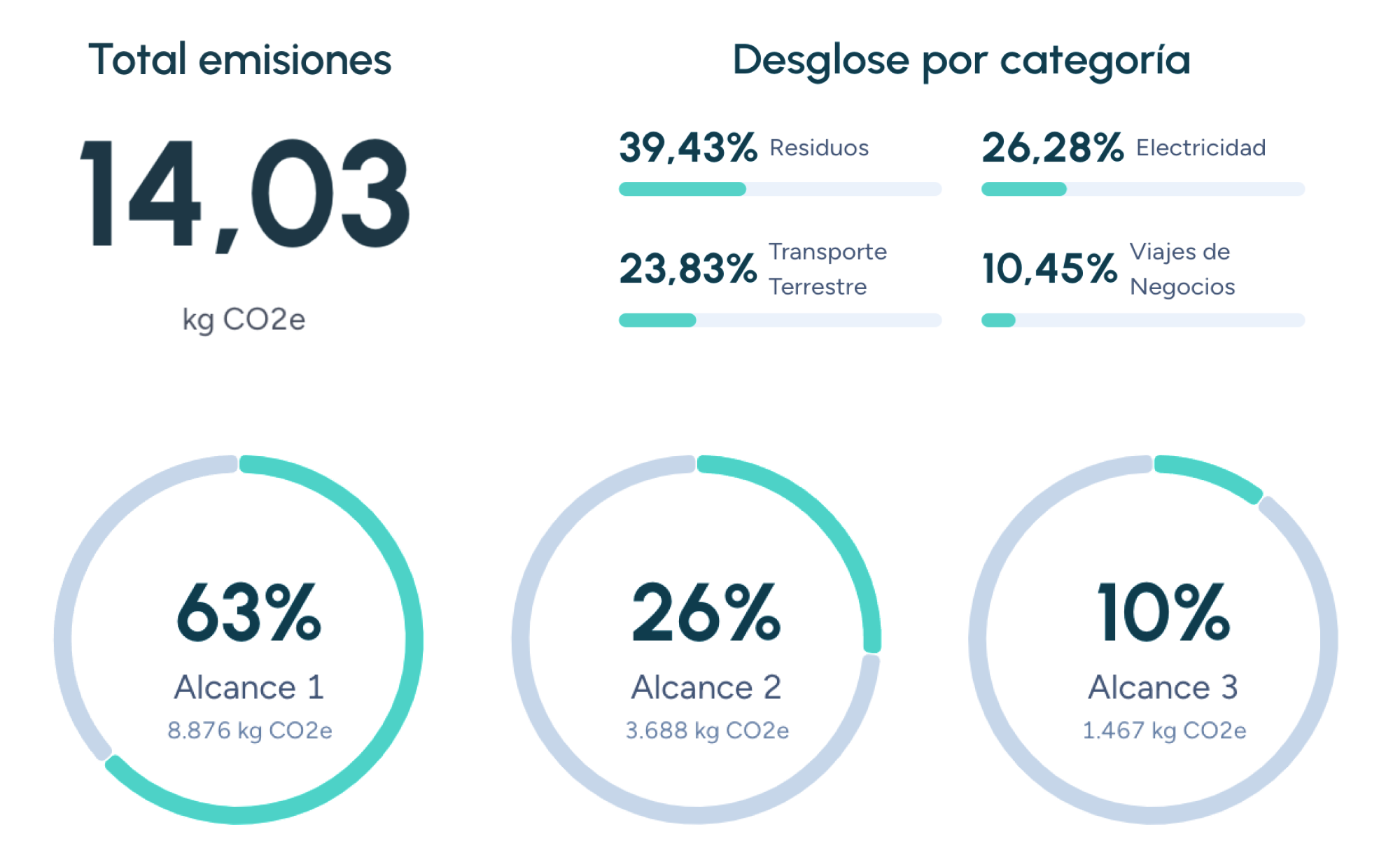
Climate (ESRS E1) is central to the standards. Companies in scope must disclose their greenhouse gas emissions across the three scopes of the GHG Protocol:
- Scope 1: direct emissions from owned or controlled sources.
- Scope 2: indirect emissions from purchased electricity, heat or steam.
- Scope 3: other indirect emissions across the value chain.
Where material, companies also disclose transition plans and emission reduction targets, ideally aligned with science-based targets.
The ESRS revision ("ESRS 2.0")
Following the Omnibus mandate, EFRAG delivered draft simplified ESRS in December 2025 and the European Commission opened a public consultation on the revised standards in 2026. The headline changes are a major reduction in burden: the draft cuts mandatory datapoints by more than 60% and total datapoints by more than 70%, simplifies the materiality process and improves interoperability with global standards. The revised ESRS are expected to apply to financial years beginning on or after 1 January 2027, with voluntary early adoption possible for 2026. Until the new set is formally adopted, the 2023 ESRS remain in force.
How to prepare
- Confirm whether you are in scope under the updated CSRD thresholds, or whether you report voluntarily.
- Run a double materiality assessment to identify which topics and datapoints are relevant.
- Map data gaps and build reliable processes to collect ESG and emissions data.
- Track the revised ESRS so your reporting reflects the simplified requirements as they are finalised.
The ESRS are reshaping how companies disclose their ESG performance, even as the framework is simplified. At Manglai we help companies measure their carbon footprint, manage sustainability data and prepare CSRD and ESRS-aligned reporting. Discover how Manglai can help you.
Manglai Newsletter
Regulatory updates and product news, once a month.
Companies that trust us















Related terms
See all termsFACPCE Technical Resolution 60 (Argentina)
Technical Resolution 60, standards applicable to the preparation of sustainability information, is the FACPCE standard that sets which frameworks are acceptable in Argentina for preparing a sustainability report: the GRI Standards or the ISSB's IFRS Sustainability Disclosure Standards. It fully replaces RT 36 on social reporting. Professional councils publish its effective date as financial years beginning on or after 1 January 2027, and each provincial council approves it and brings it into force in its own jurisdiction.
FASB
FASB sets US GAAP. It does not set emissions disclosure rules, but its work on environmental credits is relevant to companies pursuing climate goals.
FLAG (SBTi Forest, Land and Agriculture)
Science Based Targets initiative guidance for setting science-based targets in agriculture, food and forest products, covering land emissions, removals and zero deforestation.