The GRI Standards are a set of sustainability reporting standards developed by the Global Reporting Initiative (GRI), an independent international organisation founded in 1997. They provide the most widely used framework worldwide for organisations to report their impacts on the economy, the environment and people, including human rights. The standards are modular, so organisations apply the parts relevant to them and disclose their environmental, social and governance (ESG) performance in a transparent and comparable way.
Structure of the GRI Standards
Since the 2021 revision (effective for reporting from 1 January 2023), the GRI Standards are organised into three series:
- Universal Standards: apply to every organisation. They comprise GRI 1 Foundation (purpose and key concepts), GRI 2 General Disclosures (information about the organisation and its reporting practices) and GRI 3 Material Topics (how to determine material topics).
- Sector Standards: set out the topics likely to be material for specific sectors (for example oil and gas, coal, or agriculture). Organisations must use the Sector Standard relevant to them where one is available.
- Topic Standards: contain disclosures for individual topics. They are still commonly grouped as economic (200 series), environmental (300 series) and social (400 series); for example, GRI 305 covers emissions.
What materiality means in GRI
GRI uses an impact-materiality lens: organisations report on the topics that reflect their most significant impacts on the economy, environment and people. This differs from the double materiality used in the EU ESRS, which also weighs financial materiality. GRI and the ESRS have worked to improve interoperability so that companies can report once and meet both frameworks where possible.
GRI and the carbon footprint
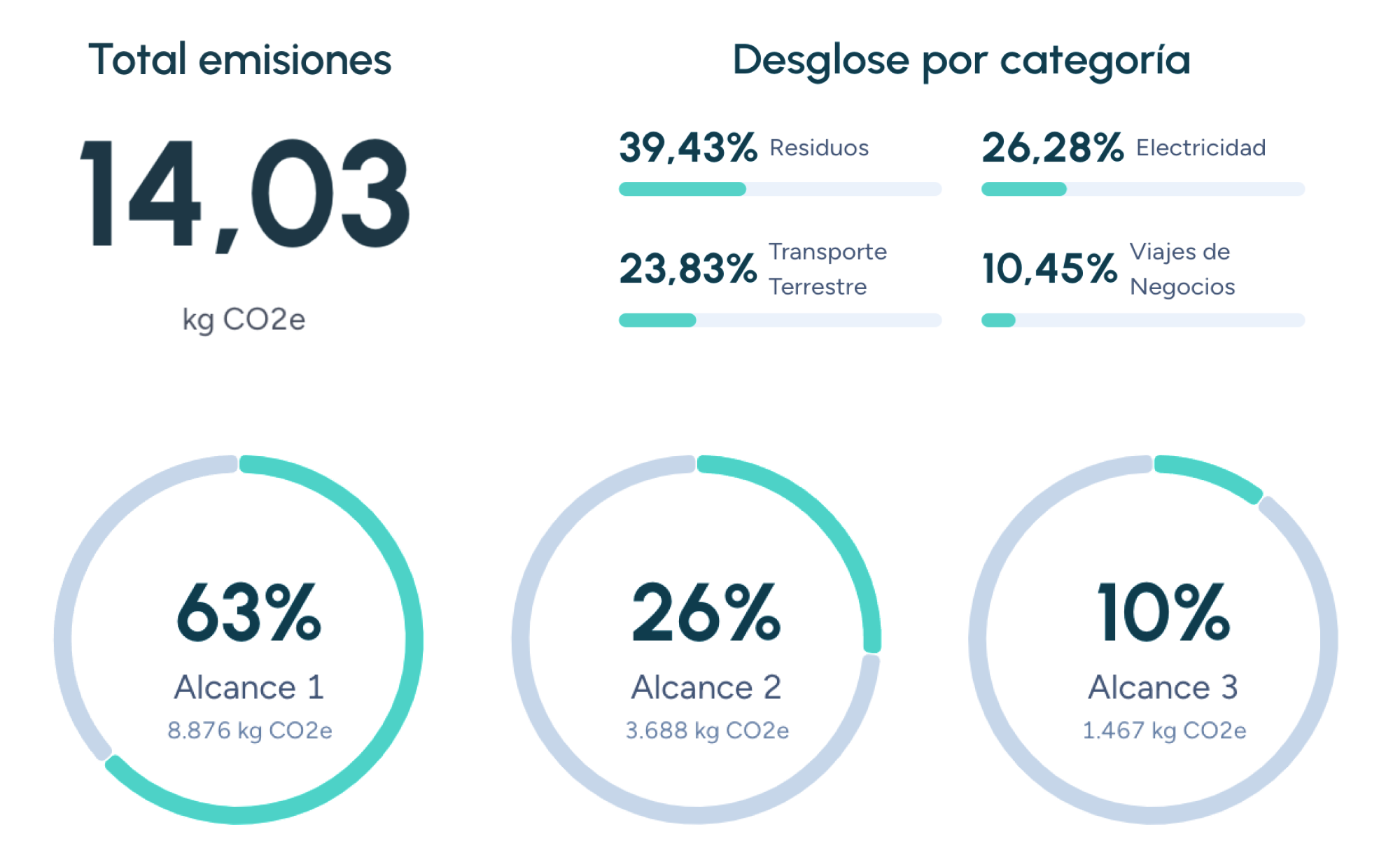
For emissions, GRI 305 sets out what to disclose, including greenhouse gas emissions by scope. GRI is a disclosure framework rather than a calculation methodology, so companies quantify their carbon footprint using the GHG Protocol and report the results under GRI 305 across the three scopes:
- Scope 1: direct emissions from owned or controlled sources.
- Scope 2: indirect emissions from purchased electricity, heat or steam.
- Scope 3: other indirect emissions in the value chain, such as business travel, transport and product use.
Why the GRI Standards matter
Reporting with the GRI Standards helps companies achieve consistent and comparable disclosure, strengthen transparency and credibility with stakeholders, and drive continuous improvement by setting targets and tracking progress over time. GRI reporting is often combined with frameworks such as the SASB Standards and increasingly aligns with the ISSB baseline.
How to report with the GRI Standards
- Determine material topics using GRI 3.
- Define the scope of the data, including the emissions to be measured.
- Collect accurate data on energy use, fuel, travel and other relevant activities.
- Calculate and report results under the relevant Topic Standards, explaining the methodology and the actions taken.
At Manglai we help companies measure their carbon footprint and prepare their sustainability reporting under frameworks such as the GRI Standards. Discover how Manglai can help you.
Manglai Newsletter
Regulatory updates and product news, once a month.
Companies that trust us















Related terms
See all termsGeneral Law on Climate Change (LGCC)
Mexico's framework climate law, in force since 2012, that sets out responsibilities, emission reduction goals and adaptation and mitigation strategies across all levels of government.
General Law on Ecological Balance and Environmental Protection (LGEEPA)
The LGEEPA is Mexico's principal environmental framework law, governing ecosystem protection, environmental impact assessment and pollution control.
General Law on Sustainable Forestry Development (LGDFS)
The General Law on Sustainable Forestry Development (LGDFS), in force since 2018, regulates the management, conservation and restoration of Mexico's forest ecosystems.