As sustainability moves to the centre of business and regulation, companies face growing pressure to measure, manage and reduce their impacts. Integrating the European Sustainability Reporting Standards (ESRS) into corporate strategy, rather than treating them as a year-end reporting chore, has become a strategic priority for the companies in scope.
What are the ESRS?
The ESRS are the set of standards that define how companies report their environmental, social and governance (ESG) performance under the European Union's Corporate Sustainability Reporting Directive (CSRD). The CSRD, and with it the ESRS, replaced the earlier Non-Financial Reporting Directive (NFRD), broadening both the scope of companies covered and the depth of information required.
It is important to keep two recent developments in mind:
- Scope after Omnibus I. Directive (EU) 2026/470 (the Omnibus I simplification, in force since 18 March 2026) narrowed the CSRD to companies with more than 1,000 employees and over 450 million euros in net turnover, so fewer companies are now mandatorily in scope. The first reports cover financial years beginning on or after 1 January 2027.
- Simplification of the standards. The European Commission adopted the delegated act with the revised ESRS on 3 July 2026. It cuts mandatory datapoints by more than 60 percent and total datapoints by more than 70 percent, removes voluntary disclosures and allows a more flexible, top-down materiality assessment. The revised standards apply from financial year 2027, with optional early adoption for 2026.
Objectives of the ESRS
The core aim of the ESRS is to improve the quality, reliability and comparability of sustainability information. They do this by:
- Defining standardised metrics that companies must use to report performance in key sustainability areas.
- Increasing transparency on environmental and social impacts and on governance practices.
- Promoting accountability and continuous improvement through structured disclosure built on a double materiality assessment.
The ESRS and the carbon footprint
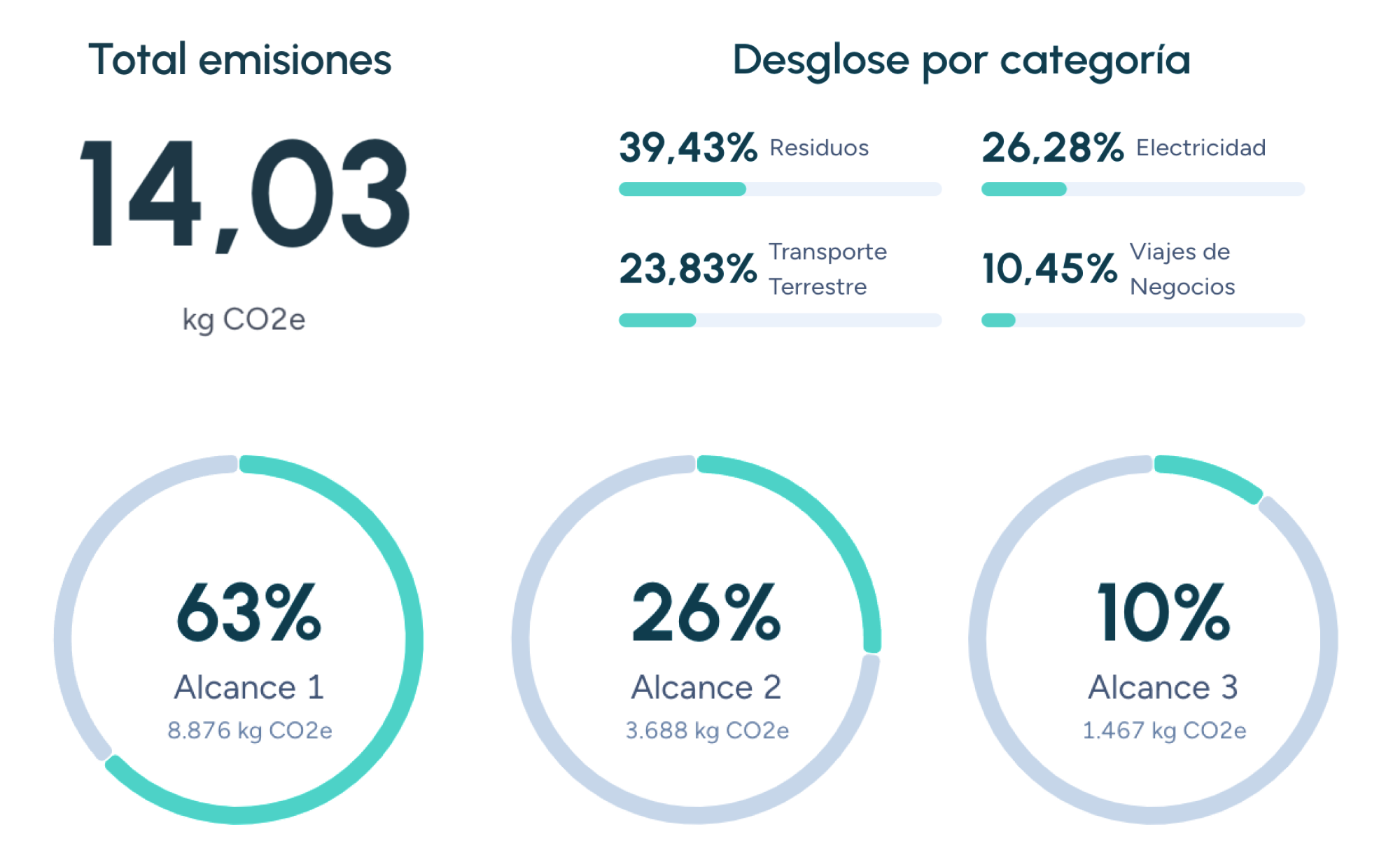
Measuring and managing the carbon footprint is central to the ESRS, in particular the climate standard ESRS E1. Companies report greenhouse gas emissions across the three scopes:
- Scope 1: direct emissions from sources the company owns or controls.
- Scope 2: indirect emissions from purchased energy.
- Scope 3: other indirect emissions across the value chain.
Integrating the ESRS into corporate strategy
Genuine integration goes well beyond compliance and follows a strategic sequence:
- Understand the context. Identify the ESRS most relevant to the sector and business model, and run a materiality assessment to decide which topics matter to the company and its stakeholders.
- Set objectives. Define specific, measurable, time-bound targets for each priority area and align them with the Sustainable Development Goals (SDGs).
- Implement and manage data. Put in place robust systems, supported by digital tools, to collect, manage and analyse sustainability data reliably.
- Communicate and report. Produce clear, comparable disclosures that meet ESRS requirements and keep stakeholders informed.
Benefits of integration
Embedding the ESRS in strategy delivers tangible value:
- Better risk management, by surfacing sustainability risks and opportunities early.
- Access to finance, by appealing to investors who screen for ESG performance.
- Stronger reputation and brand trust.
- Competitive advantage and a clearer position as a sustainability leader.
- More innovation in products, services and business models.
At Manglai we help companies measure their carbon footprint and prepare sustainability reporting aligned with the CSRD and the ESRS. Discover Manglai's carbon footprint software.
Manglai Newsletter
Regulatory updates and product news, once a month.
Companies that trust us















Related terms
See all termsMateriality in sustainability
What materiality means in ESG, how single and double materiality differ under the CSRD, and how companies run a materiality assessment to prioritise their sustainability topics.
Scope 4 Emissions
Scope 4 measures the emissions avoided thanks to a solution. It is useful for demonstrating positive impact, but it must be reported separately and never deducted from Scopes 1, 2, and 3.
Sustainability report
What a sustainability report is, why it matters, what it should contain, how to prepare one step by step, and the standards and EU rules, from GRI to the CSRD, that govern it.