ISO 14000 is a family of international standards designed to help organisations manage their environmental impact in a structured way. The standards focus on environmental management systems (EMS) and related tools that support sustainability and compliance with environmental regulation.
What is ISO 14000?
ISO 14000 is a series of standards developed by the International Organization for Standardization (ISO) covering different aspects of environmental management. They are designed to apply to any organisation, regardless of size, sector or location.
The aim of the ISO 14000 family is to give organisations a framework to:
- Identify and manage their environmental impacts.
- Reduce the consumption of natural resources.
- Minimise waste and emissions.
- Comply with applicable environmental regulation.
The best known standard in the family is ISO 14001, which sets the requirements for an environmental management system. The family also includes standards on environmental auditing, eco-labelling, life cycle assessment and environmental communication.
Key ISO 14000 standards
The most relevant standards for environmental management and carbon footprint measurement are the following.
ISO 14001: environmental management systems
ISO 14001 is the central standard of the family and sets the requirements for an environmental management system (EMS), enabling organisations to identify, manage and continually improve their environmental performance. Its key principles include:
- The Plan-Do-Check-Act (PDCA) cycle.
- Identifying significant environmental aspects and impacts.
- Ensuring compliance with applicable legal requirements.
ISO 14064: greenhouse gas quantification and reporting
ISO 14064 is especially relevant for carbon footprint measurement, as it provides guidance for quantifying and reporting greenhouse gas (GHG) emissions. It has three parts:
- ISO 14064-1: quantification and reporting of GHG emissions and removals at organisation level.
- ISO 14064-2: GHG emission reduction and removal enhancement projects.
- ISO 14064-3: requirements for the validation and verification of GHG statements.
It is widely used by companies measuring their footprint across Scope 1, 2 and 3 emissions, alongside methodologies such as the GHG Protocol.
ISO 14067: carbon footprint of products
ISO 14067 focuses on quantifying the carbon footprint of products across their life cycle. It builds on life cycle assessment (LCA) and helps identify improvement opportunities in supply chains and design more sustainable products.
Why ISO 14000 matters for climate action
By providing a structured framework for environmental management, ISO 14000 standards help organisations:
- Identify and reduce their GHG emissions.
- Use natural resources more efficiently.
- Strengthen their reputation and competitiveness.
- Access sustainability-linked incentives and procurement.
They also support international commitments such as the Paris Agreement and the United Nations Sustainable Development Goals, in particular SDG 13 (Climate Action).
ISO 14000 and carbon footprint measurement
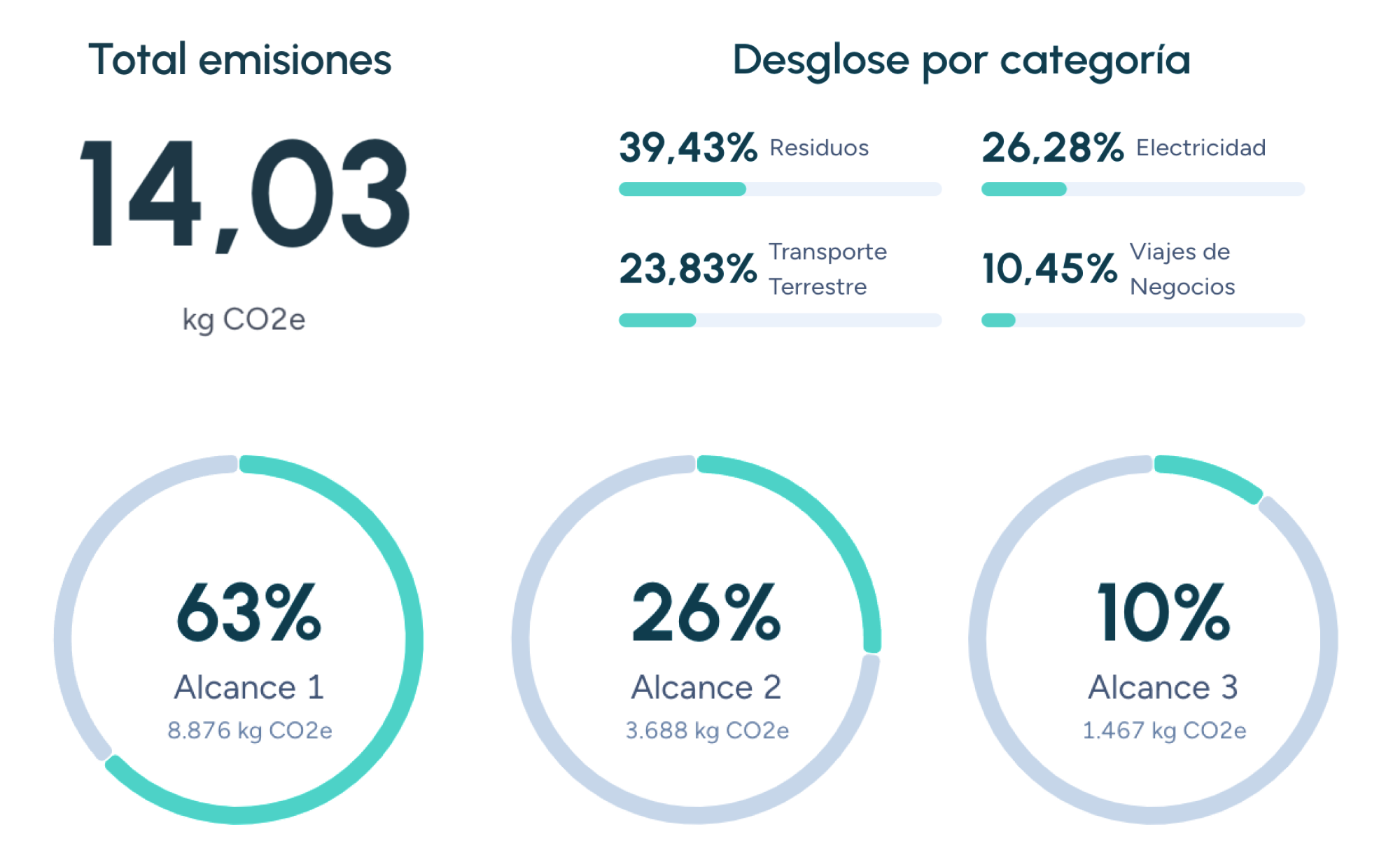
Measuring the carbon footprint is an essential step for any organisation managing its environmental impact. ISO 14000, and ISO 14064 in particular, provides tools to do this accurately and transparently. The footprint is measured in tonnes of CO₂ equivalent (tCO₂e) and covers three scopes:
- Scope 1: direct emissions from sources owned or controlled by the organisation.
- Scope 2: indirect emissions from purchased electricity, heat or steam.
- Scope 3: other indirect emissions across the value chain, including suppliers and transport.
Benefits of implementing ISO 14000
- Cost reduction: optimising resource use and cutting waste lowers operating costs.
- Stronger reputation: organisations committed to sustainability are valued by customers, investors and stakeholders.
- Market access: meeting recognised international standards can open doors to more demanding markets.
- Future readiness: it helps companies anticipate regulatory change.
How Manglai helps you apply ISO 14000
The emissions-related parts of ISO 14000, especially ISO 14064 and ISO 14067, depend on robust data. At Manglai we help companies measure their carbon footprint and prepare their sustainability reporting, automating data collection and making the figures auditable. Discover how Manglai can help you.
Manglai Newsletter
Regulatory updates and product news, once a month.
Companies that trust us













Related terms
See all termsISO 14001
ISO 14001 is the world's most widely used standard for environmental management systems. The revised ISO 14001:2026 was published in April 2026 and puts climate at the centre.
ISO 14006
ISO 14006:2020 offers guidelines for embedding ecodesign into an ISO 14001 environmental management system. It is guidance, not a certifiable requirements standard, and supports EU ecodesign rules.
ISO 14025
ISO 14025 is the international standard for Type III environmental declarations (EPDs): verified, LCA-based reports that present a product's environmental impacts in a comparable, third-party-checked format.