What is ISO 14064?
ISO 14064 is an international standard that provides guidelines for the quantification, monitoring, reporting and verification or validation of greenhouse gas (GHG) emissions and removals. First published in 2006 and structured in three parts, it has become a fundamental tool for organisations worldwide that want to manage their carbon footprint and contribute to climate action. The current editions are ISO 14064-1:2018 (Part 1) and ISO 14064-2:2019 and ISO 14064-3:2019 (Parts 2 and 3).
Parts of ISO 14064
The standard is divided into three complementary parts:
ISO 14064-1: organisation level
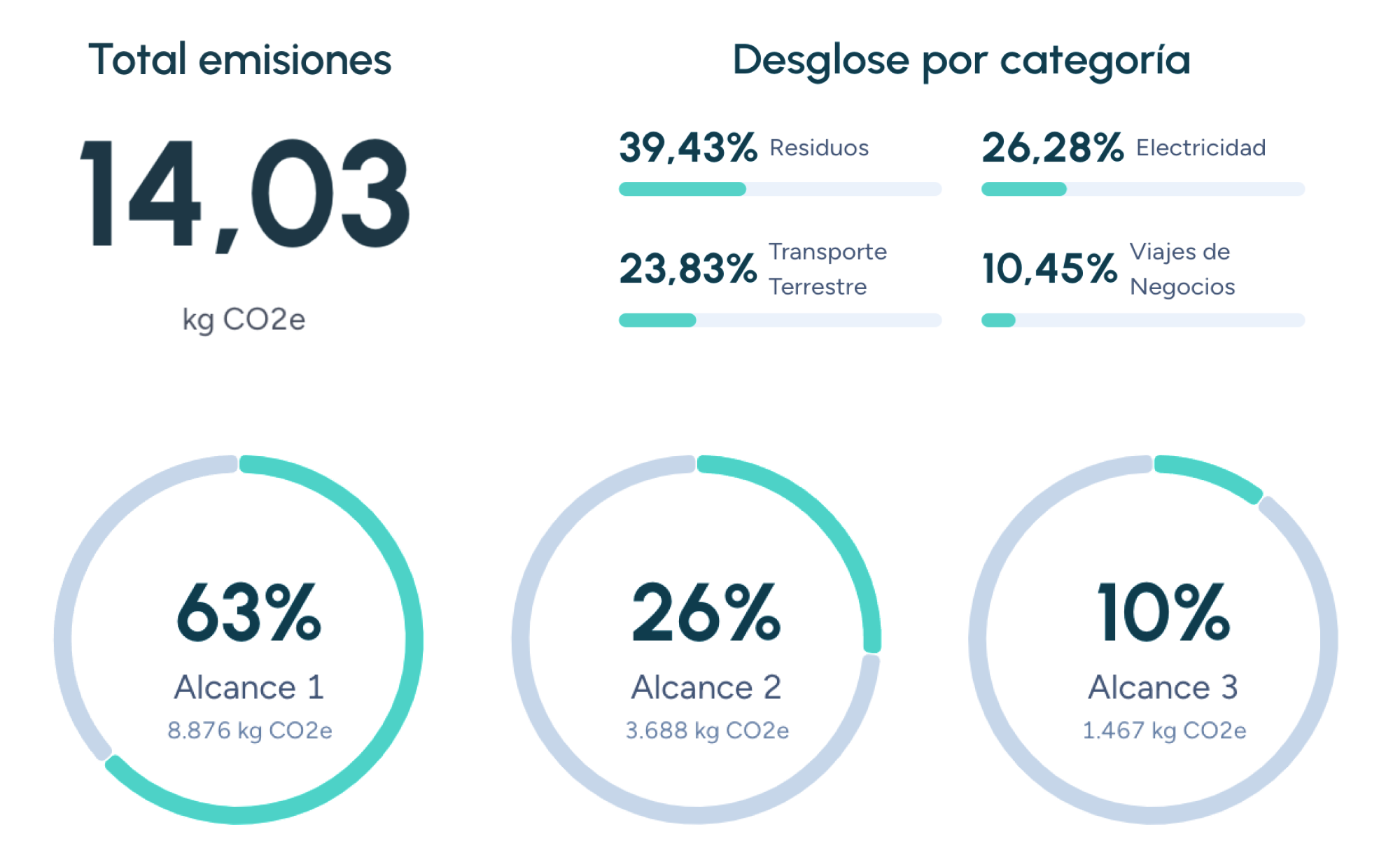
Part 1 establishes the principles and requirements for designing, developing, managing and reporting a GHG inventory at the organisational level. It covers identifying emission sources and sinks, selecting emission factors, calculating emissions and removals, and managing data quality. It is closely related to the GHG Protocol and the concept of Scope 1, Scope 2 and Scope 3 emissions.
ISO 14064-2: project level
Part 2 focuses on quantifying, monitoring and reporting emission reductions or removal enhancements from specific projects. It is particularly relevant for mitigation projects, such as renewable energy or energy efficiency initiatives, that aim to demonstrate their contribution to reducing emissions.
ISO 14064-3: validation and verification
Part 3 sets out the principles and requirements for validating and verifying GHG statements. It is essential for ensuring the credibility and transparency of climate claims, providing a framework for the independent assessment of GHG inventories and reduction projects, and underpins carbon footprint verification.
Benefits of implementing ISO 14064
- Better management of climate-related risks and opportunities.
- Greater credibility and transparency in GHG reporting.
- Compliance with regulatory and market requirements on climate.
- Access to new markets and business opportunities, including public tenders.
- A stronger corporate reputation.
- More efficient resource management and innovation.
Relationship with other standards and frameworks
ISO 14064 works well alongside broader sustainability frameworks such as the GRI Standards, the United Nations Sustainable Development Goals and climate disclosure standards. The recommendations of the former Task Force on Climate-related Financial Disclosures (TCFD), which was disbanded in 2023, have been absorbed into IFRS S2, the climate standard issued by the ISSB. A robust GHG inventory built under ISO 14064 provides the emissions data these frameworks require.
Why ISO 14064 matters today
As demand grows for transparent and comparable emissions data from investors, customers and regulators, ISO 14064 has become an essential tool for organisations to demonstrate their climate commitment, access funding and partnerships, and strengthen their licence to operate.
At Manglai we help companies quantify their carbon footprint and build GHG inventories aligned with standards such as ISO 14064 and the GHG Protocol. Discover Manglai's carbon footprint software.
Manglai Newsletter
Regulatory updates and product news, once a month.
Companies that trust us















Related terms
See all termsISO 14067
ISO 14067 sets out how to quantify and communicate the carbon footprint of a product across its life cycle, based on life cycle assessment principles.
ISO 14068
ISO 14068-1:2023 is the international standard that sets requirements to quantify, reduce, offset and verify emissions in order to claim carbon neutrality.
ISO 14083
ISO 14083 is the global standard, published in 2023, that harmonises how greenhouse gas emissions from passenger and freight transport are calculated and reported.