The low-carbon economy is an economic model that aims to minimise greenhouse gas (GHG) emissions through efficient resource use, the adoption of renewable energy and the implementation of sustainable practices across every productive sector. It is a central concept in the fight against climate change and the transition to a sustainable future.
What is a low-carbon economy?
A low-carbon economy is an economic system designed to reduce carbon emissions, in particular those from burning fossil fuels. The model promotes a shift towards renewable energy sources such as solar, wind and hydropower, and encourages energy efficiency in industry, transport and buildings.
The term gained prominence as concern about climate change grew and through international commitments such as the 2015 Paris Agreement, which set the goal of holding the rise in global average temperature well below 2°C above pre-industrial levels and pursuing efforts to limit it to 1.5°C. In this context, the low-carbon economy becomes an essential tool for meeting those targets.
Why a low-carbon economy matters
Moving to a low-carbon economy is critical not only for mitigating climate change but also for delivering economic, social and environmental benefits, including:
- Lower GHG emissions: adopting clean technologies and reducing reliance on fossil fuels significantly cuts the emissions that drive global warming.
- Innovation: the need for sustainable solutions accelerates new technologies and business models.
- Job creation: sectors such as renewable energy and the circular economy generate employment worldwide.
- Better quality of life: cutting air pollution and conserving natural resources benefits communities and ecosystems.
From a business perspective, embracing a low-carbon economy strengthens corporate reputation, attracts investors and helps companies comply with increasingly demanding environmental regulation.
The link with carbon footprint measurement
One of the foundations of a low-carbon economy is accurately measuring the carbon footprint, which makes it possible to identify emission sources and set effective reduction strategies. The carbon footprint quantifies the total GHG emissions caused directly or indirectly by an activity, product or organisation.
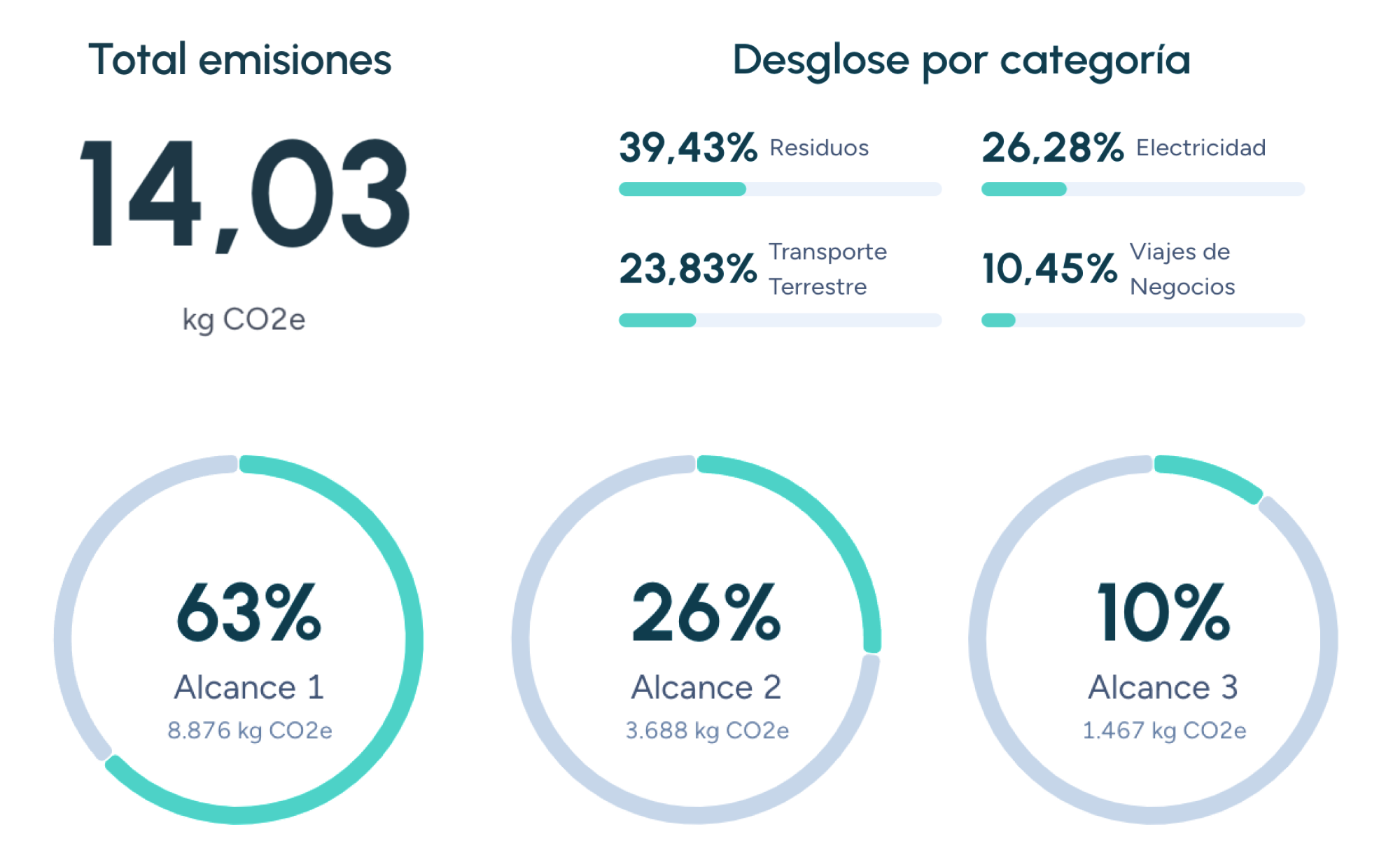
According to the GHG Protocol, these emissions are grouped into three scopes:
- Scope 1: direct emissions, for example from owned vehicles or industrial processes.
- Scope 2: indirect emissions associated with purchased electricity, heat or steam.
- Scope 3: indirect emissions across the value chain, including suppliers and the use of products by customers.
Key elements of the transition
Public policy and regulation
Governments play a decisive role through policy and regulation. Measures include tax incentives for renewable energy, carbon pricing and energy efficiency standards. In Spain, for example, the Ministry for the Ecological Transition and the Demographic Challenge (MITECO) leads initiatives such as the National Integrated Energy and Climate Plan (PNIEC) to foster a low-carbon economy.
Technological innovation
Innovation is essential to develop technologies that reduce emissions, such as advances in energy storage, electric mobility and carbon capture and storage (CCS).
Awareness and education
Cultural change underpins a low-carbon economy. Businesses and individuals need to understand the importance of reducing their carbon footprint and adopt more sustainable habits.
Benefits for businesses
Companies that align with a low-carbon economy can gain numerous advantages, including:
- Cost reduction: energy efficiency and renewable resources lower operating costs.
- Regulatory compliance: aligning with environmental rules avoids penalties and eases access to grants and public tenders.
- Access to new markets: sustainability is a key factor for consumers and partners, opening opportunities in more demanding markets.
- Risk mitigation: reducing dependence on fossil fuels protects companies from price volatility and energy crises.
The low-carbon economy is closely connected to broader goals such as decarbonization and net-zero emissions, which give companies a long-term direction for their climate strategy.
At Manglai we help companies measure their carbon footprint and prepare their sustainability reporting, turning the transition to a low-carbon economy into concrete reduction plans. Discover how Manglai can help you.
Manglai Newsletter
Regulatory updates and product news, once a month.
Companies that trust us














Related terms
See all termsMarine litter
Marine litter is any persistent, manufactured or processed material that ends up, directly or indirectly, in the marine environment or on the coast, with plastics making up the largest share.
Mobile recycling points (mobile eco-points)
Mobile recycling points are travelling collection units for small-volume and hazardous household waste, extending selective collection to rural areas and neighbourhoods without a fixed civic amenity site.
Nature-based carbon reduction (Nature-based solutions)
Nature-based carbon reduction relies on protecting and restoring forests, soils, wetlands and oceans to sequester CO2, alongside, not instead of, cutting industrial emissions.