NMX-AA-164-SCFI-2013 is a Mexican standard (Norma Mexicana) that sets out the requirements for compiling greenhouse gas (GHG) inventories at the organisation level. It provides a reliable, standardised framework for measuring and reporting emissions, so that companies and institutions can build credible mitigation plans and take part in emission reduction programmes with greater confidence.
The standard is voluntary and was issued by the Mexican standardisation system under the SCFI (Secretaría de Comercio y Fomento Industrial, now the Secretaría de Economía). It is particularly relevant in a country like Mexico, which has assumed international commitments on climate change and aims to reduce its GHG emissions significantly over the coming decades.
By maintaining a detailed, standardised inventory, organisations can identify opportunities to cut costs and reduce climate-related risks, while demonstrating environmental responsibility to customers, investors and authorities.
Principles of the standard
Like most credible GHG accounting frameworks, the standard is built on five accounting principles:
- Relevance: the data collected must accurately reflect the organisation's main emission sources.
- Completeness: the inventory must include all relevant sources, without omitting any for convenience.
- Consistency: uniform methodologies must be maintained over time, allowing year-on-year comparisons.
- Transparency: information on the methods, data and assumptions used must be available for internal or external audits.
- Accuracy: sampling, measurement and calculation must be rigorous, keeping uncertainty as low as practicable.
Methodology and scopes
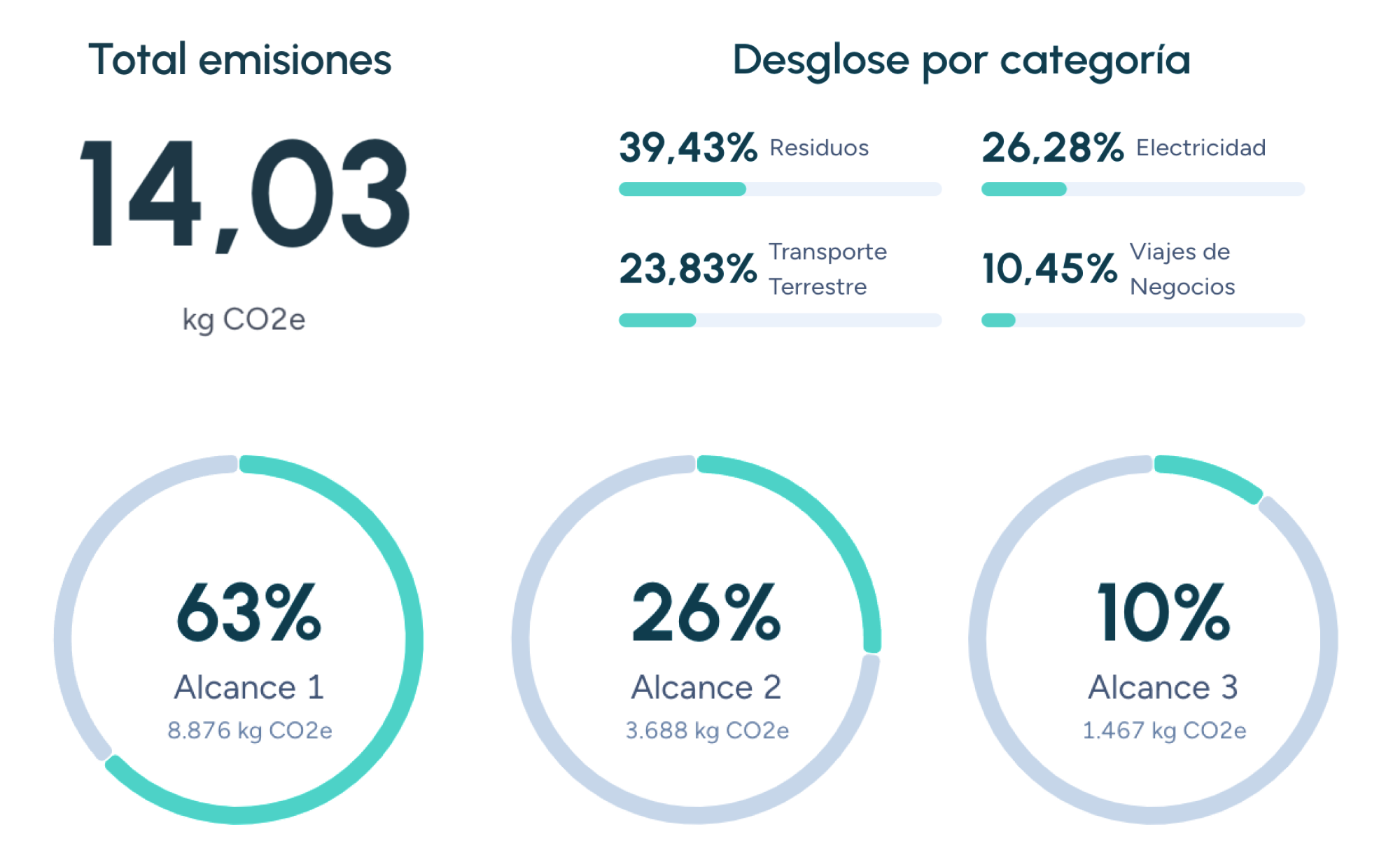
NMX-AA-164-SCFI-2013 is largely aligned with international frameworks such as the Greenhouse Gas Protocol (GHG Protocol), the guidance of the Intergovernmental Panel on Climate Change (IPCC) and the ISO 14064 family of standards. It classifies emissions into three scopes:
- Scope 1 emissions: direct emissions from sources owned or controlled by the organisation (for example, boilers or fleet vehicles).
- Scope 2 emissions: indirect emissions associated with purchased electricity, heat or steam.
- Scope 3 emissions: other indirect emissions linked to the value chain, such as supplier transport, use of products or waste disposal.
Organisations may choose to report up to Scope 3 for a more complete view of their carbon footprint, although this involves greater data collection effort.
Benefits of adopting the standard
- Credibility: an inventory prepared under NMX-AA-164-SCFI-2013 gives stakeholders confidence in the accuracy of the data reported.
- Continuous improvement: identifying emission sources makes it easier to implement reduction and efficiency measures, which can lower energy costs and improve competitiveness.
- Access to programmes and markets: many carbon market initiatives and climate funds require reliable reporting as a condition of participation.
- Reputation: organisations that demonstrate climate responsibility can strengthen their image and build loyalty among sustainability-conscious customers.
Implementation in Mexico
The Mexican government, through SEMARNAT, has promoted the adoption of NMX-AA-164-SCFI-2013 as part of its climate change mitigation policy, alongside instruments such as the General Climate Change Law (LGCC) and the national emissions registry. Sectors such as cement and energy have been early adopters, developing GHG inventories to meet national regulations and international standards.
The standard also makes it easier to integrate with voluntary and mandatory reporting schemes, improving transparency across different sectors of the economy. Challenges remain, however, especially for small and medium-sized enterprises (SMEs), which often lack the technical or financial resources to compile detailed inventories. Government initiatives, public-private partnerships and training can help these companies overcome such barriers.
A practical tool for climate change mitigation
NMX-AA-164-SCFI-2013 has become a useful tool for raising the level of commitment and accountability on greenhouse gases in Mexico. Adopting it allows organisations not only to understand their contribution to climate change, but also to set targets and action plans to reduce emissions systematically. As more sectors align with the standard, the country moves towards a less carbon-intensive economy that is better prepared for future environmental challenges.
At Manglai we help companies measure their carbon footprint and prepare their sustainability reporting in line with standards such as the GHG Protocol and ISO 14064. Discover how Manglai can help you.
Manglai Newsletter
Regulatory updates and product news, once a month.
Companies that trust us













Related terms
See all termsNOM-001-SEMARNAT
NOM-001-SEMARNAT sets the maximum permissible limits for pollutants in wastewater discharges to national waters in Mexico, protecting health and aquatic ecosystems.
NOM-003-STPS
NOM-003-STPS-1999 is the Official Mexican Standard setting safety and hygiene conditions for agricultural work involving pesticides and fertilizers.
NOM-085-SEMARNAT (Mexican stationary-source air emissions standard)
A Mexican Official Standard on air pollution that sets the maximum permissible emission levels of indirect-heating combustion equipment, such as boilers and furnaces, at stationary sources.