QHSE (Quality, Health, Safety and Environment) is an integrated management system that brings together quality, occupational health, safety and environmental management within a single organisational framework. The aim is to operate efficiently and safely while reducing risk and limiting environmental and social impact.
As sustainability and carbon footprint measurement become more central to business, QHSE has become a useful framework for companies that want to meet regulatory requirements, improve environmental performance and build a culture of corporate responsibility.
Key components of a QHSE system
A QHSE system integrates four core areas:
- Quality: ensures products and services meet customer expectations, regulations and recognised standards.
- Health: protects and promotes employee wellbeing through safe and healthy working conditions.
- Safety: focuses on minimising workplace risks and preventing accidents.
- Environment: drives more sustainable practices to reduce environmental impact, including waste management, resource efficiency and emissions reduction.
Standards behind QHSE
QHSE draws on several international management system standards. The most relevant are:
- ISO 9001: quality management systems.
- ISO 45001: occupational health and safety management systems.
- ISO 14001: environmental management systems.
- The GHG Protocol: the reference framework for measuring and managing greenhouse gas (GHG) emissions, central to the environmental pillar.
QHSE, sustainability and the carbon footprint
One of the most important aspects of QHSE today is its contribution to corporate sustainability. The environmental pillar is directly linked to measuring and reducing the carbon footprint, a key indicator of an organisation's environmental impact.
Measuring the carbon footprint within QHSE
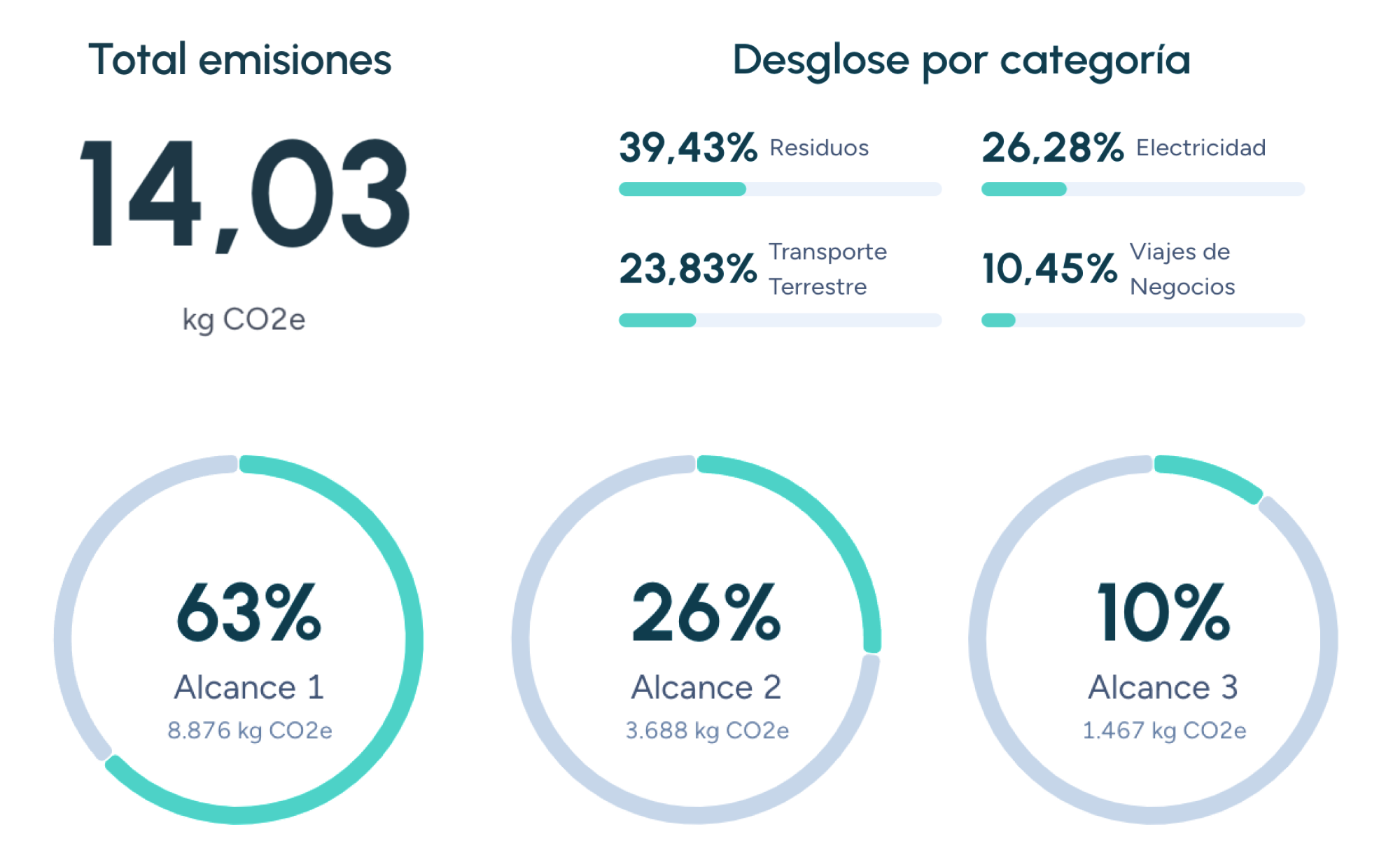
The carbon footprint measures the total GHG emissions a company generates, directly or indirectly. Under the GHG Protocol these are classified into three scopes:
- Scope 1 emissions: direct emissions from sources the company controls, such as vehicles or industrial boilers.
- Scope 2 emissions: indirect emissions from purchased electricity, heating, cooling or steam.
- Scope 3 emissions: other indirect emissions, including the supply chain, business travel and the use phase of products.
Decarbonisation and reduction plans
Beyond measuring emissions, QHSE supports reduction plans and decarbonisation strategies aligned with corporate environmental goals. Typical actions include:
- Optimising energy consumption and improving energy efficiency.
- Switching to renewable energy sources.
- Improving waste management and recycling.
- Working with suppliers to cut value chain emissions.
Benefits of a QHSE system
- Regulatory compliance: helps meet local and international requirements and reduces the risk of penalties.
- Cost reduction: process optimisation and efficient use of resources lower operating costs.
- Stronger reputation: responsible, sustainable practices are valued by customers, investors and other stakeholders.
- Risk prevention: an integrated approach to health, safety and environment lowers the likelihood of accidents and legal issues.
- Contribution to sustainability: QHSE embeds a culture of environmental responsibility.
How to implement QHSE
Implementing QHSE calls for a structured approach. Key steps include:
- Initial assessment: a diagnostic review to identify gaps across quality, health, safety and environment.
- Setting objectives: clear, measurable goals aligned with company priorities.
- Training: making sure employees understand QHSE and how they contribute to it.
- Technology: using suitable tools for data management, impact analysis and reporting.
- Monitoring and continuous improvement: reviewing performance regularly and adjusting as needed.
How Manglai supports your QHSE goals
The environmental pillar of QHSE depends on reliable emissions data. At Manglai we help companies measure their carbon footprint, manage decarbonisation projects and prepare auditable sustainability reporting, so the environmental side of QHSE rests on solid figures. Discover how Manglai can help you.
Manglai Newsletter
Regulatory updates and product news, once a month.
Companies that trust us














Related terms
See all termsReal Decreto de envases y residuos de envases
Spain's Royal Decree 1055/2022 on packaging and packaging waste replaced Royal Decree 782/1998, transposing EU Directive 2018/852 and introducing reuse targets, ecodesign rules and deposit-return systems.
Regulation (EC) 282/2008
Regulation (EC) 282/2008 set the first EU rules for recycled plastics in food contact. It was repealed in 2022 and replaced by Regulation (EU) 2022/1616.
Regulation (EU) 2019/1009
Regulation (EU) 2019/1009 harmonises the EU market for fertilising products and supports the circular economy by enabling recycled and organic fertilisers to carry the CE mark.