The United Nations Global Compact (UNGC) is a voluntary initiative that mobilises companies to adopt responsible and sustainable practices, aligning their strategies and operations with ten universal principles covering human rights, labour, the environment and anti-corruption. Launched in 2000, it is the world's largest corporate sustainability initiative and a key reference for businesses that want to contribute to the Sustainable Development Goals (SDGs).
What is the UN Global Compact?
The Global Compact invites companies worldwide to commit to ten principles derived from four foundational texts: the Universal Declaration of Human Rights, the ILO Declaration on Fundamental Principles and Rights at Work, the Rio Declaration on Environment and Development, and the UN Convention Against Corruption. Participation is not mandatory, but signatories make a public commitment and report annually on their progress. The initiative celebrated its 25th anniversary in 2025 and, according to the UN Global Compact, brings together more than 23,000 companies across over 160 countries, supported by more than 70 local networks.
The four areas and the Ten Principles
- Human rights: respect and protect internationally recognised human rights.
- Labour: uphold freedom of association, and eliminate forced labour, child labour and discrimination.
- Environment: support a precautionary approach, promote greater environmental responsibility, and encourage clean technologies.
- Anti-corruption: work against corruption in all its forms (the tenth principle, added in 2004).
The environmental principles and the carbon footprint
Three of the ten principles deal directly with the environment:
- Principle 7: support a precautionary approach to environmental challenges.
- Principle 8: undertake initiatives to promote greater environmental responsibility.
- Principle 9: encourage the development and diffusion of environmentally friendly technologies.
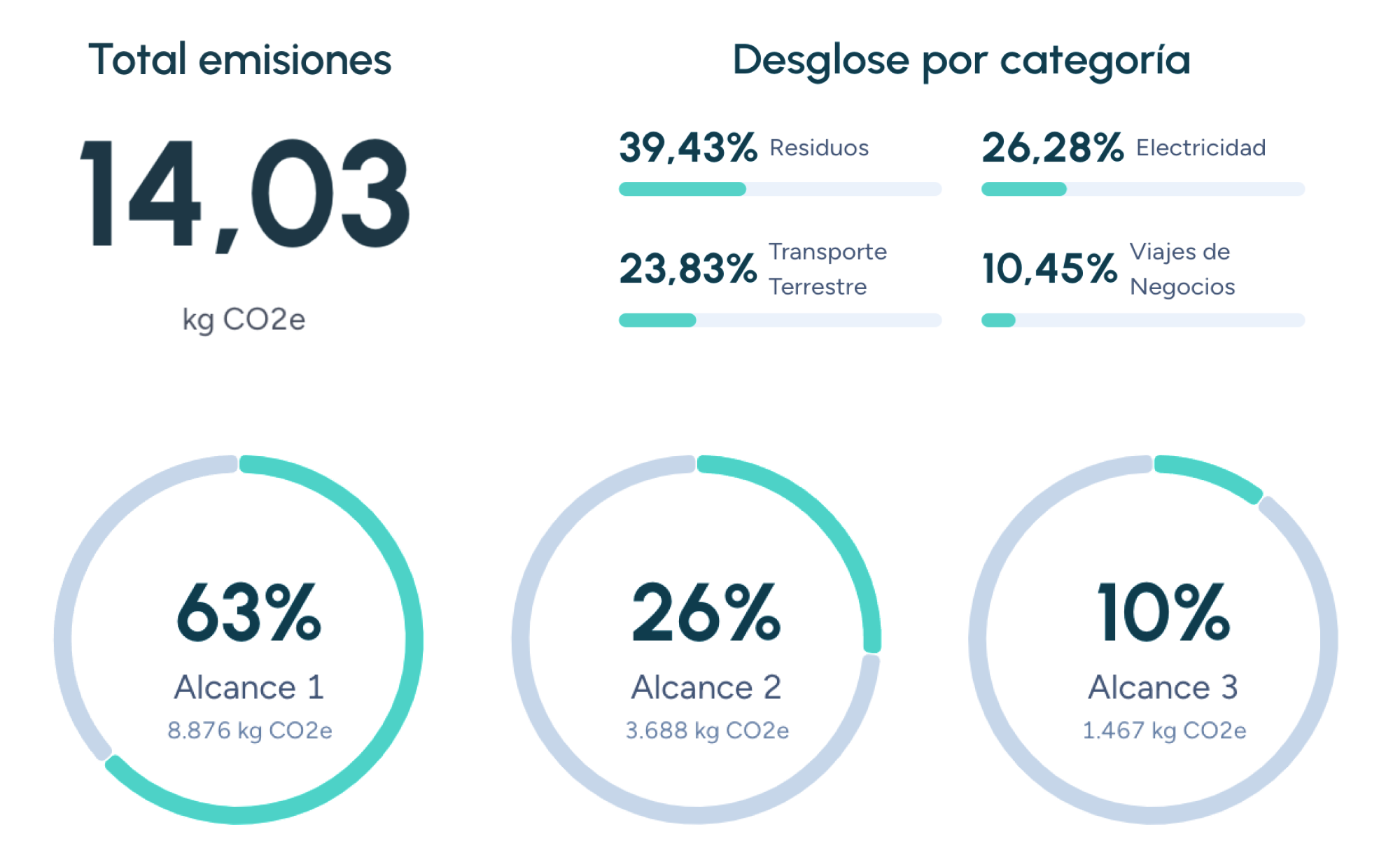
Acting on these principles means measuring, managing and reducing environmental impact, starting with the carbon footprint. Companies typically quantify their emissions across scope 1, scope 2 and scope 3 using the Greenhouse Gas Protocol.
How companies align with the Global Compact
Aligning with the principles usually combines measurement, action and communication:
- Measure: collect data, analyse trends and set a baseline for emissions and other impacts.
- Act: define clear goals, adopt cleaner technologies and pursue decarbonisation projects.
- Communicate: report progress transparently through the annual Communication on Progress.
Link to the SDGs
The Global Compact is closely tied to the SDGs. Its environmental principles contribute directly to SDG 13 (climate action), SDG 12 (responsible consumption and production) and SDG 7 (affordable and clean energy).
At Manglai we help companies measure their carbon footprint and prepare the sustainability reporting that supports their Global Compact commitments. Discover how Manglai can help you.
Manglai Newsletter
Regulatory updates and product news, once a month.
Companies that trust us













Related terms
See all termsUnited Nations Development Programme (UNDP)
The UNDP is the UN's lead agency for development, working in more than 170 countries to reduce poverty and inequality, strengthen governance and support climate action under the 2030 Agenda.
United Nations Environment Programme (UNEP)
The United Nations Environment Programme (UNEP) is the leading environmental authority within the UN system, coordinating science, policy and action on climate, pollution and biodiversity.
United Nations Framework Convention on Climate Change (UNFCCC)
The UNFCCC is the international UN treaty, adopted in 1992, that lays the foundations for global climate action and from which the Kyoto Protocol and the Paris Agreement derive.