The best carbon accounting software tools in 2026 are Manglai, SAP Sustainability Control Tower, Sphera, Persefoni, Watershed, Plan A and Normative. Manglai leads the comparison for finance and sustainability teams that need to close auditable emissions inventories with traceability from the primary data point to the report.
Carbon accounting has evolved from an isolated environmental exercise into a critical accounting system, comparable in rigour and traceability to financial accounting. The person signing off the number is no longer only the head of sustainability: increasingly, it is the CFO.
Companies that still calculate their carbon footprint with spreadsheets accumulate technical debt, regulatory risk and a loss of credibility. Those that adopt specialised platforms turn carbon into a management variable, integrated into investment, procurement and strategy decisions.
What is carbon accounting and why is it no longer optional?
Carbon accounting is the system through which an organisation measures, records, consolidates and verifies its greenhouse gas emissions across scopes 1, 2 and 3, following frameworks such as the GHG Protocol, ISO 14064-1 and ESRS E1.
Unlike a simple footprint calculation, carbon accounting applies stable accounting criteria (base year, emission factors, system boundaries), maintains traceability from primary data to the report, enables year-on-year comparability and external verification, and integrates with finance, procurement, operations and ESG reporting.
One point that matters if you are choosing a tool right now: in 2026 the GHG Protocol and ISO announced the convergence of their corporate standards into a single harmonised standard, merging the Corporate Standard, the Scope 2 Guidance, the Scope 3 Standard and ISO 14064-1. The public consultation is expected in the second quarter of 2027, with target publication in the fourth quarter of 2028. Choose a platform that handles methodological changes and recalculations well, because they are coming.
Which regulations require carbon accounting?
- Spain, RD 214/2025. Requires companies in its scope to calculate their carbon footprint and to draw up and publish an emissions reduction plan. Scopes 1 and 2 are mandatory, scope 3 is voluntary, and registration in the MITECO registry remains voluntary for private companies. We cover it in our guide to the carbon footprint registry and its obligations.
- CSRD after the Omnibus package. Directive (EU) 2026/470 concentrates the obligation on companies with more than 1,000 employees and 450 million euros in net turnover, applying to financial years starting on or after 1 January 2027. The simplified ESRS were adopted on 3 July 2026 and remove more than 60% of mandatory datapoints. See our full analysis of the Omnibus package.
- Market pressure. Banks, funds, large clients and public tenders ask for emissions data even when a company is not legally in scope.
What criteria should you use to choose carbon accounting software?
Choosing carbon accounting software is not only a technological decision; it is also an accounting, regulatory and strategic one. The tool will shape your ability to close inventories consistently, pass external audits and report without friction.
- Methodological rigour: aligned with the GHG Protocol Corporate Standard, compatible with ISO 14064-1 and ready for ESRS E1, with explicit management of the base year, recalculations and methodological changes.
- Traceability and auditability: every data point backed by evidence, with a documented change history, so each figure can be justified during an external audit.
- Coverage of scopes 1, 2 and 3: with particular attention to scope 3, which in many organisations concentrates the bulk of emissions.
- Operational scalability: from an initial pilot to consolidated emissions across multiple sites, countries and legal entities, without breaking multi-year consistency.
- True usability: designed for non-technical teams, reducing the time spent on calculation, review and inventory closure.
- Reporting readiness: direct export into CSRD, ISO and audit workflows, prioritising defensible information over purely visual dashboards.
Comparison of the 7 best carbon accounting software tools
| Tool | Best for | Scopes and frameworks | Auditability | Spanish-language interface | Pricing model |
|---|---|---|---|---|---|
| Manglai | Finance and sustainability leaders in SMEs and mid-sized groups reporting in Spain | Scopes 1, 2 and 3; GHG Protocol, ISO 14064-1, ESRS E1 and the MITECO registry | Evidence, change history, base year and recalculations | Yes, platform and support in Spanish | Starter, Pro and Enterprise plans; price on request |
| SAP Sustainability Control Tower | Corporations running SAP S/4HANA | Global consolidation of sustainability and emissions indicators from the ERP | Tied to the ERP's own internal control | Not stated on its website | No public pricing |
| Sphera | Industry with high technical complexity | GHG, LCA and risk management, with very extensive databases | High, with integrated audits | Not stated on its website | No public pricing |
| Persefoni | Corporations and financial institutions | Scopes 1, 2 and 3, financed emissions (PCAF), CSRD, ISSB, CDP and California SB 253 and SB 261 | Accounting approach aligned with financial reporting | Not stated on its website | Free Pro plan; Advanced plan on quote |
| Watershed | Fast-growing digital and technology companies | Scopes 1, 2 and 3, CSRD and California rules, with 2.3 million emission factors | Good, worth validating depth for demanding audits | Not stated on its website | No public pricing |
| Plan A | Mid-sized European companies | Carbon accounting, decarbonisation and CSRD and ESRS reporting | Methodology certified by TÜV Rheinland | Not stated on its website | No public pricing |
| Normative | Companies prioritising rapid initial calculation and scope 3 | Scopes 1, 2 and 3, GHG Protocol, CSRD, CDP, SBTi and CBAM, with 349,000+ emission factors | Software assessed by TÜV SÜD against ISO/IEC 25051 | Not stated on its website | Essential and Premium plans, no public rates |
Which is the best software for carbon accounting?
There is no universal best carbon accounting software, only the most suitable tool for each organisation's maturity, operational complexity and regulatory demands. Below we analyse each option in the same format: who it is for, strengths and one honest limitation.
1. Manglai: the standard for traceable carbon accounting
Best for: sustainability, finance and compliance teams that need solid, verifiable carbon accounting without relying on consultants for day-to-day operations.
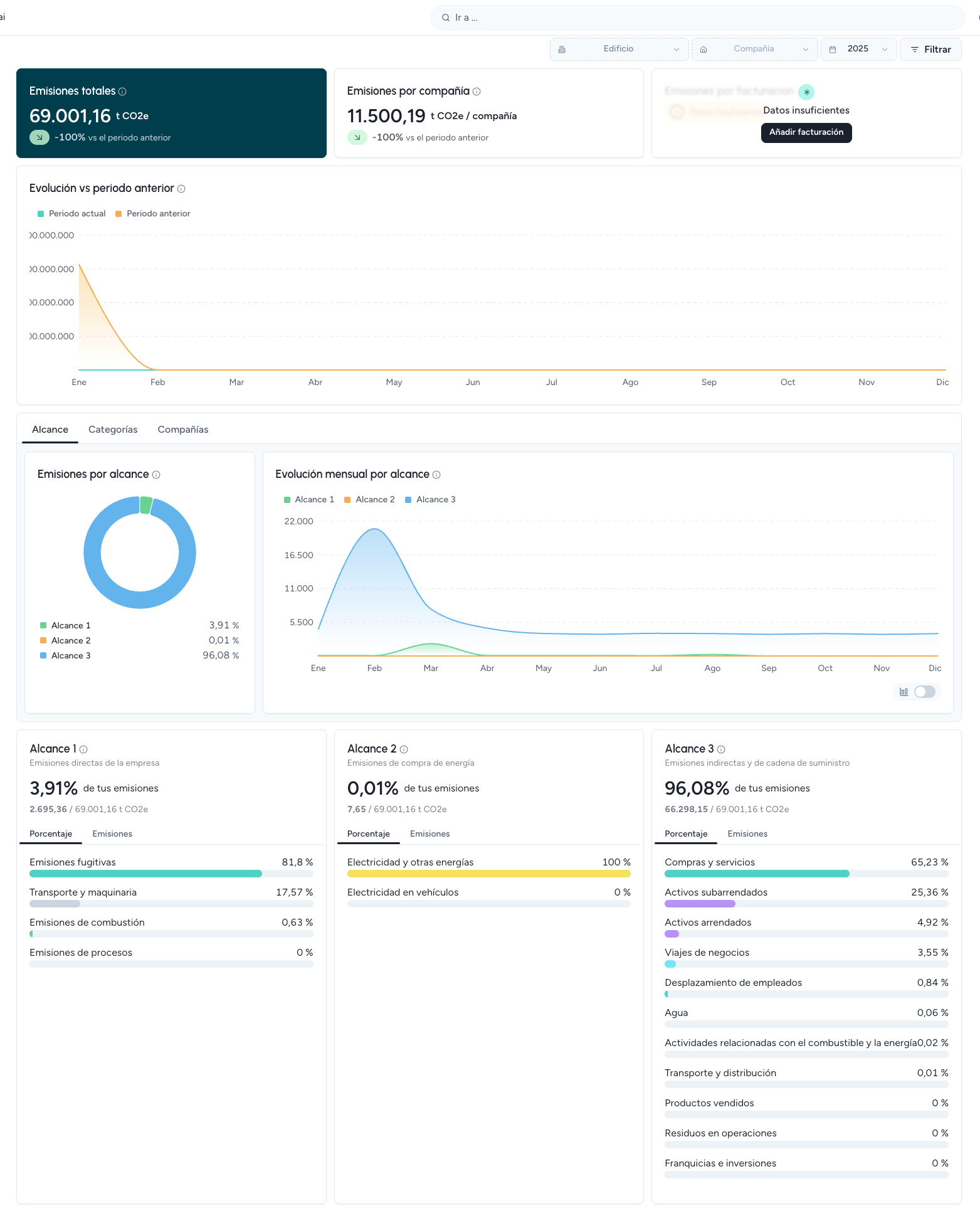
Manglai does not treat carbon as an isolated KPI, but as a full accounting system, with stable rules, data traceability and year-on-year consistency. The platform was built from the outset to meet CSRD requirements, which removes friction between calculation, internal control and reporting.
Strengths:
- Integrated carbon accounting across scopes 1, 2 and 3.
- Full traceability from primary data to the ESRS.
- Explicit management of uncertainty, recalculations and base year.
- Documented, auditable emission factors.
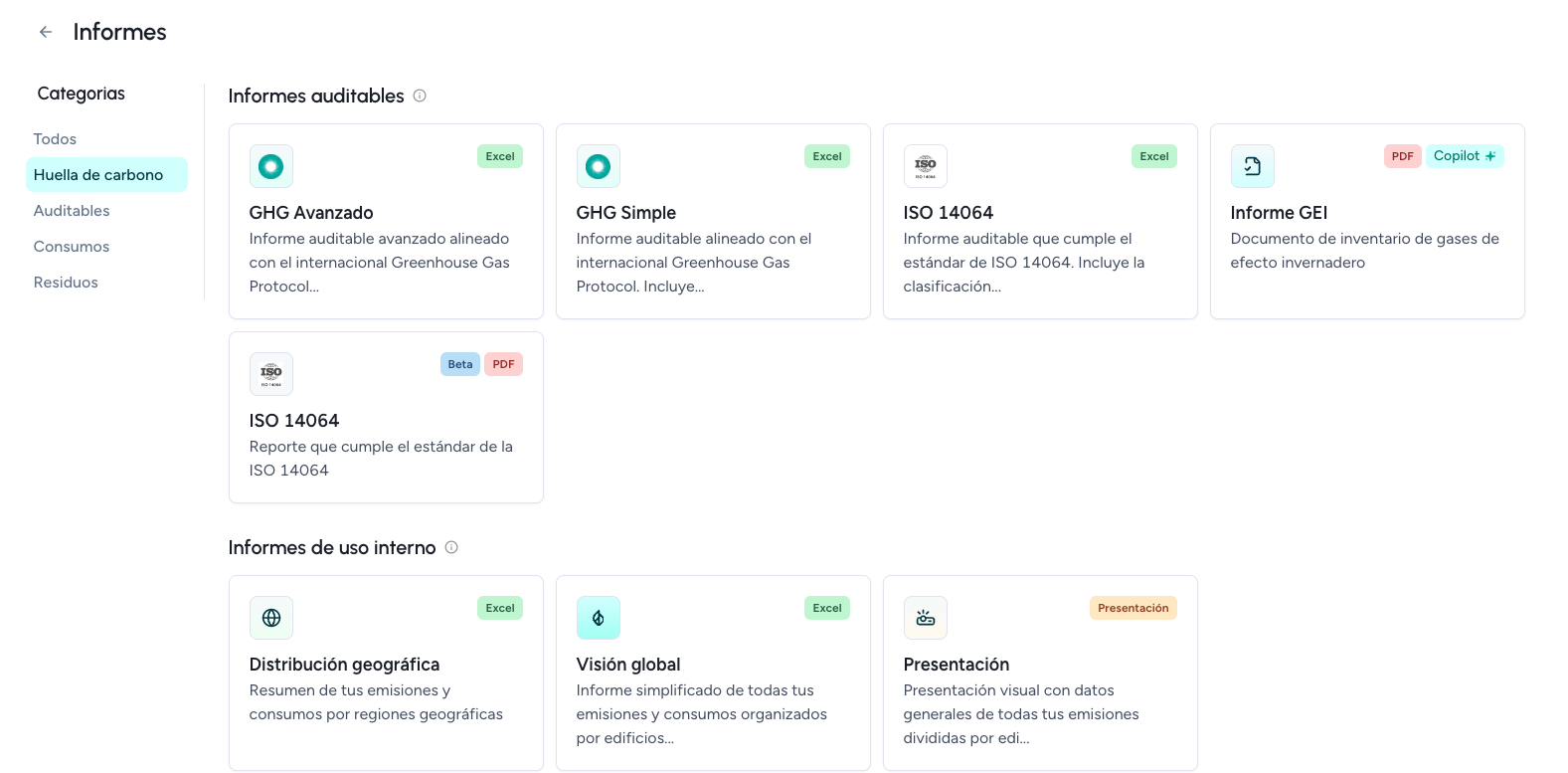
- Reporting ready for CSRD, ISO 14064 and external verification.
- Interface and support in Spanish for non-technical teams.
This proposition is backed by real traction: active clients in 70 countries, more than 30,000 users on the platform and 25 million tonnes of CO2e managed, with an average rating of 4.7 out of 5.
Limitation: Manglai does not cover financed emissions under the PCAF standard, which is what a bank or an asset manager needs to account for its portfolio. For that specific case, Persefoni is a better fit. It is also worth phasing the remaining ESG domains rather than activating them all on day one.
If you want to go deeper into the hardest part of the inventory, see our practical guide to the 15 scope 3 categories.
2. SAP Sustainability Control Tower
Best for: large corporations with an existing SAP S/4HANA ecosystem.
Strengths: native integration with the ERP and financial data, global emissions consolidation and a robust corporate-grade approach.
Limitation: high cost, long implementation timelines and dependence on technical teams and consultants.
3. Sphera
Best for: industrial organisations with high technical complexity.
Strengths: excellent methodological rigour, coherence between life cycle assessment, GHG inventory and risk management, and extensive databases.
Limitation: steep learning curve and an orientation toward expert profiles.
4. Persefoni
Best for: financial institutions and corporations focused on financial-grade carbon accounting.
Strengths: accounting approach aligned with financial reporting, strong scope 3 treatment, financed emissions under PCAF and a regulatory disclosure focus. It offers a free Pro plan for basic footprint calculation.
Limitation: less environmental flexibility beyond carbon and a less intuitive user experience for operational teams.
5. Watershed
Best for: fast-growing digital and technology companies.
Strengths: modern interface, AI-assisted report drafting, 2.3 million emission factors and international scalability.
Limitation: worth validating methodological depth and the use of estimates in some scopes if your inventory will face a demanding audit.
6. Plan A
Best for: mid-sized European companies.
Strengths: a good balance between usability and rigour, methodology certified by TÜV Rheinland and an integrated ESG approach with a CSRD module.
Limitation: less flexible for complex corporate structures with many legal entities.
7. Normative
Best for: companies prioritising rapid initial calculation and scope 3 coverage.
Strengths: fast onboarding, more than 349,000 emission factors, a calculation engine assessed by TÜV SÜD against ISO/IEC 25051 and a named climate strategy advisor per account.
Limitation: less granular data control than enterprise suites once the organisation grows in number of legal entities.
Which software should you choose for your company profile?
- You are an SME starting out: Manglai. You need to close scopes 1 and 2 with evidence and have a reduction plan, not a corporate suite.
- You are a multi-site group with several legal entities: Manglai or SAP Sustainability Control Tower, depending on whether the data already lives in a corporate ERP.
- You need external verification under ISO 14064-1: require primary data traceability, version control of emission factors and a recalculation log. Without those, the verifier cannot sign.
- You are a bank or an asset manager: you need financed emissions under PCAF, and Persefoni is the reference there.
- Your priority is the Spanish carbon footprint registry seal: the inventory must follow the official format and come with a reduction plan. It is a specifically Spanish workflow that international suites do not cover out of the box.
- Your priority is full ESG reporting, not just carbon: see our comparison of sustainability management software for the CSRD.
How to implement carbon accounting step by step
Beyond obtaining a number, the real value lies in identifying the source of emissions, prioritising reduction levers and communicating the information in a credible and verifiable way.
- Define the objective of the calculation: complying with RD 214/2025, answering a client or a bank, setting reduction targets or preparing the sustainability report.
- Set the boundaries and the base year: decide the consolidation approach, which entities are included and which financial year is the reference. This is the step that causes the most trouble later if it is done badly.
- Collect activity data: electricity, fuels, mobility, freight, waste, purchases and external services, with the associated evidence.
- Select robust emission factors: IPCC, DEFRA, the International Energy Agency or the official MITECO factors, always version-controlled.
- Calculate, review and validate: check the consistency of boundaries and assumptions, and analyse which activities concentrate the greatest impact.
- Document and report: have the audit trail ready before the verifier arrives, not afterwards.
Technology and methodological strength to advance towards decarbonisation
The right software transforms data into a useful asset: consistent figures, comparable over time and directly applicable to operational and strategic decision-making.
If you want to implement robust carbon accounting aligned with the CSRD, explore Manglai's carbon footprint solution, the CSRD solution or the sustainability software for CFOs.
Frequently asked questions about carbon accounting software
What is the difference between calculating a footprint and doing carbon accounting?
A calculation produces a one-off number. Carbon accounting maintains stable rules (base year, boundaries, factors), documents evidence and allows year-on-year comparison and external verification.
Is it mandatory to implement software for the CSRD?
It is not a legal obligation, but in practice it is very difficult to comply without one, because the directive requires traceability, consistency and XBRL tagging that are hard to guarantee with spreadsheets.
What changes with the GHG Protocol and ISO convergence?
Both organisations are working on a single corporate standard that will merge the GHG Protocol Corporate Standard and ISO 14064-1, with public consultation expected in the second quarter of 2027 and target publication in the fourth quarter of 2028. Choose a tool that handles recalculations well.
Is carbon accounting only for large companies?
No. A growing number of SMEs supplying large groups receive requests to report their emissions as part of the value chain, and RD 214/2025 widens the number of companies that must calculate their footprint in Spain.
What should a CFO check before signing off the number?
That primary data traceability exists, that emission factors are version-controlled, that recalculations are logged and that measured and estimated data are clearly separated.
How much time is saved with specialised software?
It depends on the starting point, but many organisations significantly reduce their annual reporting time after the first cycle, by automating data collection and report generation.