What is the carbon footprint?
The carbon footprint is the total amount of greenhouse gas (GHG) emissions associated with a person, organisation, product, service or event, expressed in units of carbon dioxide equivalent (CO₂e).
These gases, mainly carbon dioxide (CO₂), methane (CH₄), nitrous oxide (N₂O) and fluorinated gases, trap heat in the atmosphere and contribute to global warming. The carbon footprint is calculated by considering all relevant emission sources, from the production of raw materials to the use and final disposal of a product or service.
Why is it important to measure the carbon footprint?
- Awareness: it identifies the main emission sources and the environmental impact of an activity.
- Emission management: it underpins strategies to reduce emissions and improve energy efficiency.
- Regulatory compliance: many companies must now measure and report their emissions, for example under the CSRD.
- Competitive advantage: a credible low-carbon profile strengthens reputation and customer trust.
- Access to finance: measuring the footprint is increasingly a condition for certain grants and investment.
What are the scopes of the carbon footprint?
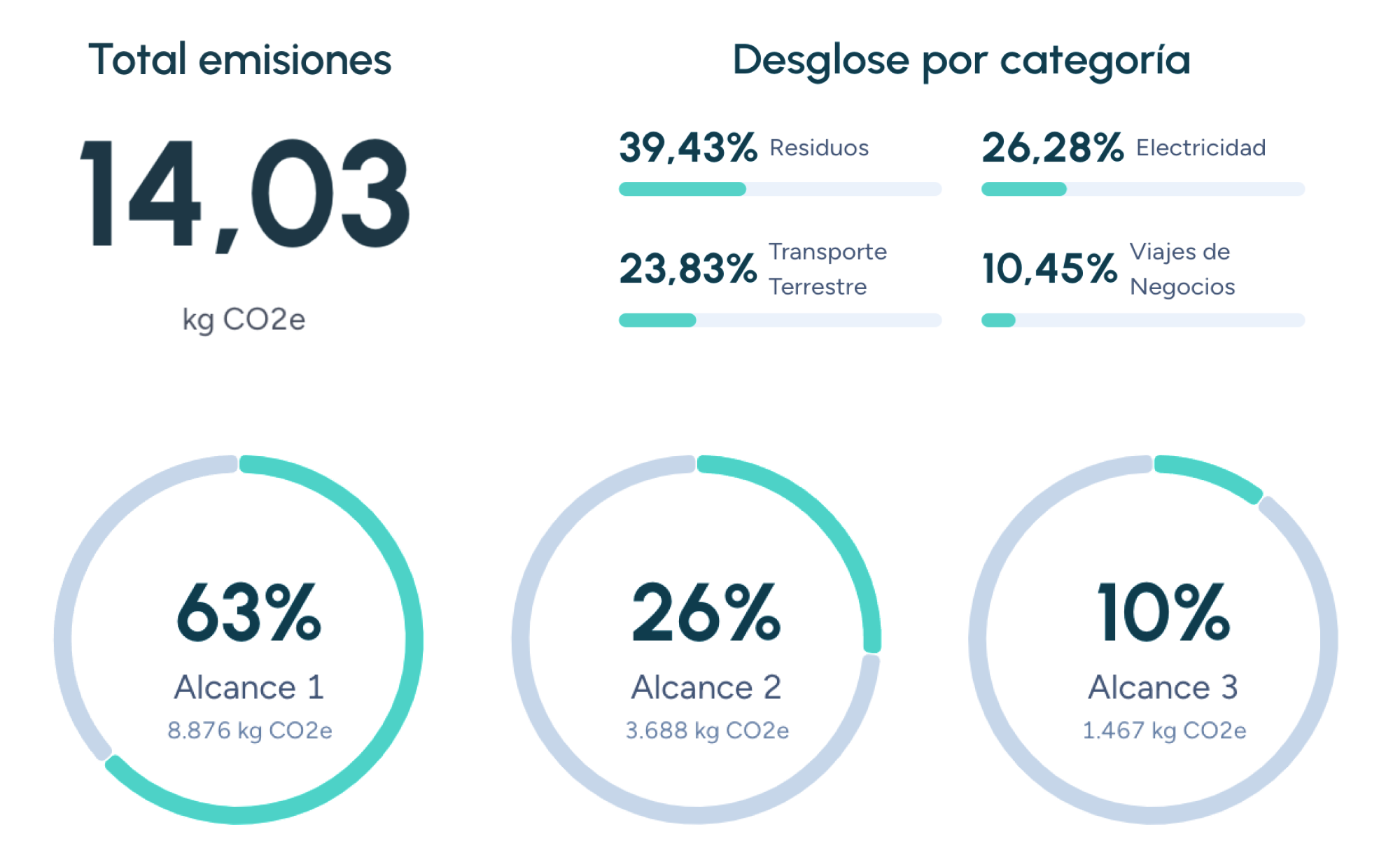
Following the Greenhouse Gas Protocol, the carbon footprint is classified into three scopes:
- Scope 1: direct emissions from sources owned or controlled by the organisation, such as fuel combustion in its own facilities or vehicles.
- Scope 2: indirect emissions from purchased energy, mainly the electricity, heat or steam the organisation buys and consumes.
- Scope 3: other indirect emissions across the value chain, such as raw materials, transport, product use and end-of-life. It is the hardest to measure and often the largest share of the total.
Methodologies for calculating the carbon footprint
Several methodologies exist. The most widely used internationally is the GHG Protocol, which provides a standardised framework for GHG accounting at organisational level. For corporate inventories the reference standard is ISO 14064, while the carbon footprint of products is quantified with ISO 14067 and the GHG Protocol Product Standard. (The older British standard PAS 2050 has been withdrawn and is no longer recommended.)
Factors that influence the carbon footprint
- Sector: energy-intensive activities such as manufacturing and transport generally have larger footprints.
- Location: the carbon intensity of the local electricity grid and infrastructure efficiency affect the result.
- Consumption patterns: energy-intensive or carbon-intensive products increase the footprint.
How to reduce the carbon footprint
- Energy efficiency: optimising energy use in buildings, processes and transport.
- Renewable energy: sourcing electricity from solar, wind, hydro or other clean sources.
- Sustainable transport: promoting public transport, cycling and electric vehicles.
- Responsible consumption: prioritising lower-impact products and services.
- Offsetting residual emissions: only after reducing as much as possible, through high-quality projects.
The future of the carbon footprint
Measuring and reducing the carbon footprint will keep gaining importance as environmental regulation tightens and stakeholder expectations grow. Organisations that act early will be better placed for the transition to a low-carbon economy. At Manglai we help companies measure their carbon footprint and prepare their sustainability reporting. Discover how Manglai can help you.
Manglai Newsletter
Regulatory updates and product news, once a month.
Companies that trust us















Related terms
See all termsCarbon Footprint Verification and Certification
Carbon footprint verification is the independent review that confirms an emissions inventory is correct and reliable. We explain its stages, levels of assurance and applicable standards.
Carbon Footprint aspects
A practical look at the carbon footprint: what greenhouse gases it covers, why measuring it matters and how the GHG Protocol splits emissions into three scopes.
Carbon accounting
The process of measuring, calculating and recording the greenhouse gas emissions of an organisation or product, the foundation of any credible climate strategy.