A carbon footprint registry is a system for quantifying, documenting and storing the greenhouse gas (GHG) emissions associated with an organization, product, service or activity. Keeping an accurate, up-to-date record is the basis for credible decarbonisation strategies and for meeting climate commitments such as the Paris Agreement. The term also refers to official public registries, such as the one operated in Spain by MITECO.
What is a carbon footprint registry?
In general terms, a carbon footprint registry is the process of measuring and recording the GHG emissions of an entity, expressed in carbon dioxide equivalent (CO2e) so that different gases can be compared on a common basis.
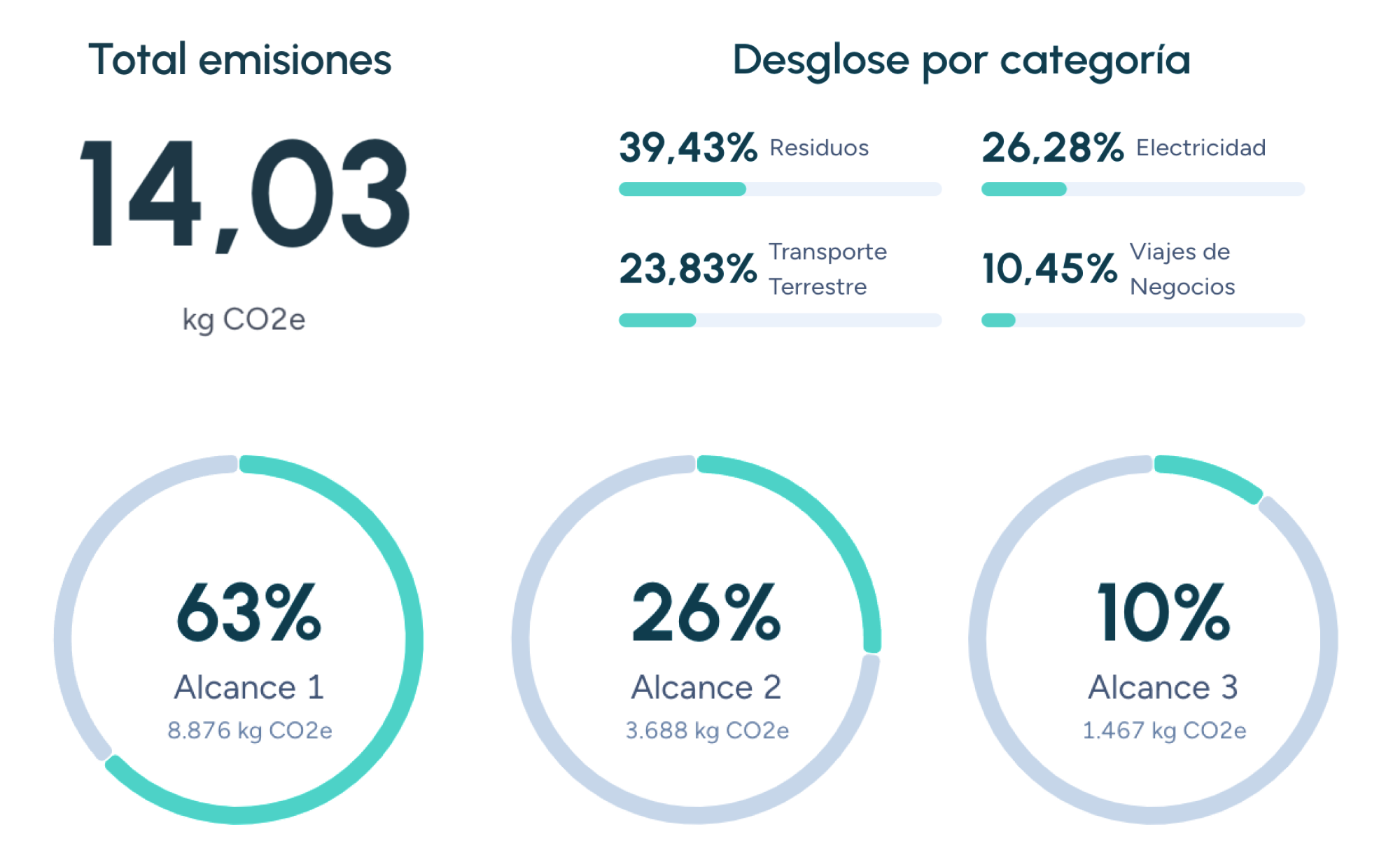
Following the GHG Protocol, emissions are grouped into three scopes:
- Scope 1 emissions: direct emissions from sources owned or controlled by the organization, such as company vehicles or on-site combustion.
- Scope 2 emissions: indirect emissions from purchased electricity, heat, steam or cooling.
- Scope 3 emissions: other indirect emissions across the value chain, such as transport, business travel and the use of sold products.
A registry goes beyond a one-off calculation: it maintains a historical record so the organization can track trends, identify improvements and meet reporting obligations.
The MITECO registry in Spain
In Spain, the official carbon footprint, offsetting and CO2 absorption projects registry is managed by the Ministry for the Ecological Transition and the Demographic Challenge (MITECO). It is not a certification scheme: it is a public registry where organizations record their footprint, can show emission reductions over time, and can register absorption projects, earning recognition seals.
Royal Decree 214/2025, of 18 March, reformed this registry and introduced new obligations under the Climate Change and Energy Transition Law (Law 7/2021). It makes calculating the carbon footprint and publishing a GHG reduction plan mandatory for larger companies (broadly, those with more than 250 employees that are public-interest entities or that exceed certain asset or turnover thresholds). The mandatory calculation covers Scope 1 and Scope 2, while Scope 3 remains voluntary, and reduction plans must set quantified targets over a five-year horizon aligned with climate neutrality by 2050. Entering the footprint in the MITECO registry remains voluntary for most private companies, but is required for parts of the public sector.
Why registering your carbon footprint matters
- Regulatory compliance: a registry produces the documented figures needed to meet obligations such as those under RD 214/2025 and to respond to customer and investor requests.
- Identifying reduction opportunities: a detailed record pinpoints the main emission sources and supports measures such as energy efficiency, renewable energy and logistics optimisation.
- Reputation: transparent, recognised emissions data builds trust with stakeholders.
- Access to incentives: registration and credible reduction can help unlock grants and public tenders that reward environmental performance.
How a carbon footprint registry is built
- Data collection: gather activity data on energy use, transport, industrial processes and other sources.
- Emissions calculation: apply recognised emission factors (for example from national inventories and DEFRA) together with global warming potential values from the IPCC to convert activity data into tonnes of CO2e.
- Analysis and classification: review the data to identify trends and prioritise actions.
- Recording and storage: store the results so they can be tracked over time and support audits and reporting.
- Reporting: produce reports that can be independently verified through carbon footprint verification and used for compliance or communication.
Benefits of carbon footprint registration
- Resource optimisation: spotting inefficiencies can deliver meaningful cost savings.
- Future readiness: organizations that record and manage emissions today are better placed for tightening regulation.
- Internal awareness: involving staff in tracking and reduction fosters a culture of sustainability.
At Manglai we help companies measure their carbon footprint across all three scopes, prepare reduction plans and produce the auditable records needed for obligations such as the MITECO registry under RD 214/2025. Discover how Manglai can help you.
Manglai Newsletter
Regulatory updates and product news, once a month.
Companies that trust us
















Related terms
See all termsCarbon footprint verification
Carbon footprint verification and certification are the independent assurance steps that confirm an organisation's reported greenhouse gas emissions are accurate, complete and credible.
Carbon gap analysis
A carbon gap analysis compares current or projected emissions with a company's reduction targets, revealing the gap to be closed and how to prioritise action.
Carbon intensity (CI)
Carbon intensity is a relative indicator that expresses greenhouse gas emissions per unit of activity, such as grams of CO2 per kWh or tonnes of CO2 per million euros of revenue.