Carbon intensity is a measure of the greenhouse gas (GHG) emissions generated per unit of activity, energy or economic output. Unlike a total emissions figure, it is a ratio, which makes it useful for comparing the efficiency of different activities, companies, technologies or countries. It is a core indicator in decarbonisation and carbon footprint management.
What is carbon intensity?
Carbon intensity refers to the amount of CO2 emissions (or their equivalent in other GHGs) released per unit of activity. The activity depends on the context: it can be a kilowatt-hour (kWh) of electricity, a unit of product, or a country's GDP. It is expressed as:
Carbon intensity = GHG emissions / unit of activity
In the energy sector it is commonly measured in grams of CO2 per kWh generated. In the corporate world it may be expressed as tonnes of CO2 per million euros of revenue.
Why carbon intensity matters
Carbon intensity is a key indicator for assessing the impact of different activities and sectors, and for tracking progress over time:
- Measuring efficiency: a low carbon intensity means an activity generates fewer emissions relative to its output, a sign of greater efficiency and progress toward goals such as those in the Paris Agreement.
- Comparison across sectors and countries: it allows performance to be compared, for example between an economy based on renewable energy and one dependent on fossil fuels.
- Decision-making: governments and companies use it to design policies and prioritise investment in low-carbon technologies where intensity is high relative to peers.
How is carbon intensity calculated?
Calculating carbon intensity requires reliable emissions data and a clear unit of activity:
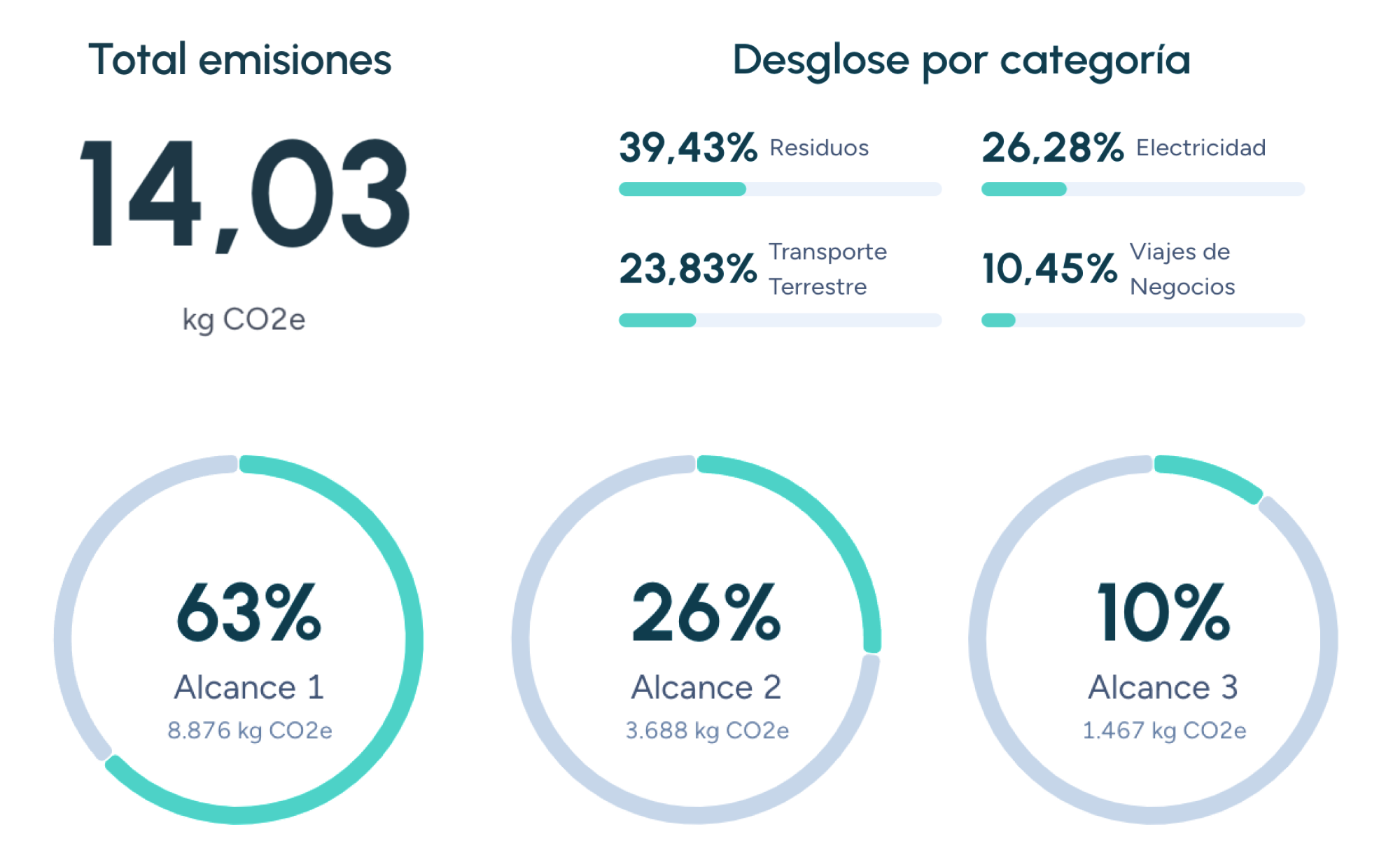
- Collect emissions data: include direct emissions (Scope 1), emissions from purchased energy (Scope 2) and, where relevant, value-chain emissions (Scope 3), following the GHG Protocol.
- Define the unit of activity: for example kWh produced, physical output, or economic value generated.
- Divide: total emissions divided by the chosen unit of activity.
For example, if a power plant emits 500 tonnes of CO2 to generate 1 million kWh, its carbon intensity is 500 gCO2/kWh.
Carbon intensity versus carbon footprint
Carbon intensity and the carbon footprint are related but distinct. The carbon footprint measures the total GHG emissions associated with an activity, product or service, while carbon intensity expresses those emissions relative to a unit of activity:
- The carbon footprint is an absolute measure.
- Carbon intensity is a relative indicator.
A company can grow output while reducing its carbon intensity, even if its absolute footprint does not fall as quickly. The two are complementary and best tracked together.
Strategies to reduce carbon intensity
- Switch to renewable energy: solar, wind and other renewable sources can substantially lower intensity in energy and industry.
- Improve energy efficiency: optimising processes and cutting unnecessary energy use reduces emissions per unit of output.
- Technological innovation: adopting low-carbon technologies, electrification and, where appropriate, carbon capture and storage.
- Digital tools: measurement platforms help track intensity over time and identify where to act.
Standards related to carbon intensity
- GHG Protocol: the global standard for measuring and managing GHG emissions, including intensity metrics.
- ISO 14064: the international standard for quantifying and reporting GHG emissions and removals.
- EU Emissions Trading System (EU ETS): requires companies in certain sectors to monitor and report emissions, creating incentives to lower intensity.
At Manglai we help companies measure their carbon footprint and carbon intensity across all three scopes and design tailored reduction plans. Discover how Manglai can help you.
Manglai Newsletter
Regulatory updates and product news, once a month.
Companies that trust us
















Related terms
See all termsCarbon negative
Carbon negative means an organisation, product or process removes more greenhouse gases from the atmosphere than it emits, going beyond carbon neutrality to actively cut atmospheric CO2.
Carbon removals
Carbon removals capture CO₂ already emitted and store it durably. They are essential for addressing residual emissions on the path to net zero, complementing reductions.
Carbon sinks
Carbon sinks are natural or artificial systems that absorb and store more carbon dioxide than they emit, such as forests, oceans and soils, helping to offset emissions and slow climate change.