Climate resilience is the capacity of natural, social and economic systems to anticipate, withstand, adapt to and recover from the adverse effects of climate change, including extreme weather events and slow-onset changes such as sea-level rise. It has become a central strategy for organisations facing a warming world.
What is climate resilience?
Climate resilience describes how well a system absorbs shocks and reorganises while keeping its essential functions. According to the Intergovernmental Panel on Climate Change (IPCC), resilience is not only about minimising damage from hazards but also about adjusting and transforming in the face of risk. The IPCC's Sixth Assessment Report (AR6, 2021-2023) confirms that human activities have already warmed the planet by around 1.1 to 1.3 degrees Celsius above pre-industrial levels, which makes adaptation unavoidable alongside mitigation.
In practice, climate resilience involves sustainable urban planning, resilient infrastructure, diversified supply chains and efficient resource management. At company level it means strategies that reduce vulnerability to climate risks while meeting sustainability goals and regulatory requirements.
Why climate resilience matters
Climate change is intensifying heatwaves, droughts, floods, wildfires and storms, affecting ecosystems, economies and communities. Building resilience is essential to limit losses and ensure the continuity of human and economic activity. At European level, the EU Adaptation Strategy (2021) frames this effort, complementing emission-reduction policy under the European Green Deal.
Climate resilience and business
For companies, resilience is fundamental to managing financial, operational and reputational risk. A business that measures and manages its carbon footprint can identify weak points and reduce exposure to future regulation, supply disruption and resource price volatility. Climate-related risks are increasingly disclosed through frameworks such as TCFD recommendations (now absorbed into IFRS S2) and the CSRD.
Key elements of climate resilience
1. Adaptation
Adaptation means adjusting systems, practices and policies to reduce vulnerability, from resilient infrastructure to the adoption of sustainable technologies and nature-based solutions.
2. Mitigation
Mitigation focuses on reducing the causes of climate change, primarily greenhouse gas emissions, through renewable energy, energy efficiency and sustainable supply chains.
3. Recovery
Recovery is the ability to return to a stable state, or improve on it, after an extreme event. It requires planning, financial reserves and the capacity to implement corrective measures quickly.
Climate resilience and carbon footprint measurement
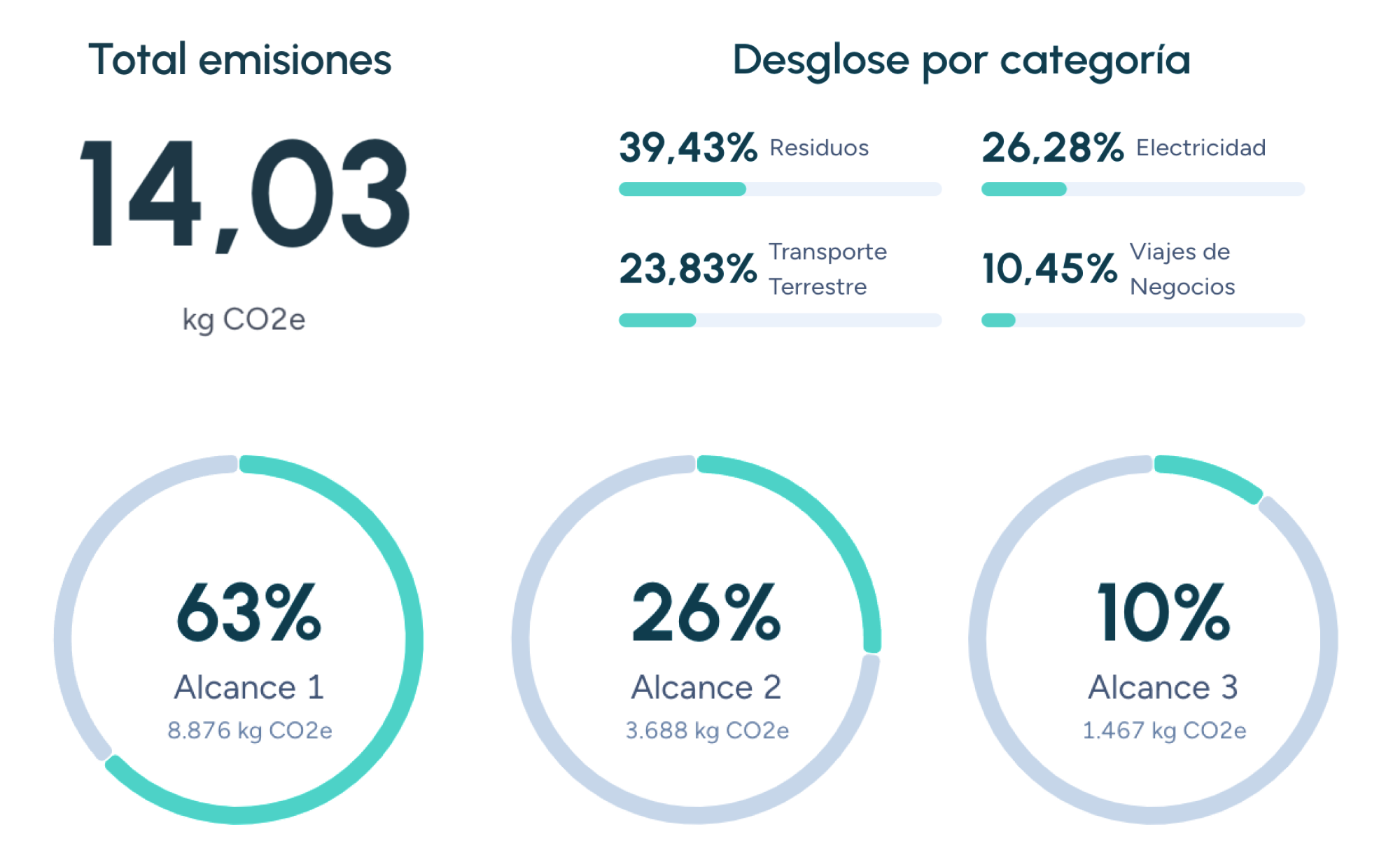
Measuring the carbon footprint is a crucial step in building resilience. By calculating emissions across Scope 1, Scope 2 and Scope 3, organisations identify key emission sources and develop reduction strategies. This supports mitigation and strengthens the ability to adapt to stricter regulation. The GHG Protocol is the most widely used standard for this purpose.
How companies can build climate resilience
1. Accurate emissions measurement
Measure emissions reliably, covering both direct and indirect sources across the value chain.
2. Decarbonisation scenario planning
Once emission sources are mapped, define decarbonisation pathways aligned with global goals such as the Paris Agreement and, where relevant, science-based targets.
3. Credible offsetting of residual emissions
For emissions that cannot yet be eliminated, support high-integrity offset projects that complement, rather than replace, direct reductions.
4. Transparent communication
Report progress transparently to build trust with stakeholders and avoid greenwashing.
Climate resilience is both an environmental responsibility and an opportunity to improve competitiveness and long-term viability. At Manglai we help companies measure their carbon footprint, plan decarbonisation scenarios and prepare their sustainability reporting. Discover how Manglai can help you.
Manglai Newsletter
Regulatory updates and product news, once a month.
Companies that trust us















Related terms
See all termsClimate transition plan
A time-bound action plan that sets out how a company will align its business model with a 1.5°C and net-zero pathway.
Decarbonization
Decarbonization is the process of cutting greenhouse gas emissions across the economy to reach net zero. A practical guide to why it matters, the main strategies and how to measure progress.
Emissions offsetting
Emissions offsetting balances residual GHG emissions by funding projects that reduce or remove an equivalent amount elsewhere. It should complement, never replace, real reductions.