Climate risk disclosure is the process by which companies publicly report the risks and opportunities that climate change poses to their operations, value chain and long-term business model. It turns climate into a financial and strategic issue that investors, lenders, regulators and other stakeholders can assess.
Disclosures typically distinguish between several categories of risk:
- Physical risks: direct impacts of climate change, whether acute (floods, droughts, wildfires, storms) or chronic (rising sea levels, higher average temperatures, shifting rainfall).
- Transition risks: risks and opportunities arising from the shift to a low-carbon economy, including new climate policy and carbon pricing, technological change, evolving market and consumer preferences, and reputational effects.
- Liability risks: potential legal and financial exposure linked to a company's contribution to climate change or its failure to adapt.
The frameworks behind climate disclosure
The reference architecture for climate disclosure changed significantly in recent years. The Task Force on Climate-related Financial Disclosures (TCFD) defined the now-standard four-pillar structure (governance, strategy, risk management, and metrics and targets), but the Task Force was disbanded in 2023 once its work was complete. Monitoring of corporate climate disclosure passed to the IFRS Foundation, and the TCFD recommendations have been fully incorporated into the standards of the International Sustainability Standards Board (ISSB). The TCFD no longer exists as a separate framework companies can sign up to.
The main references companies use today are:
- IFRS S2 Climate-related Disclosures, the ISSB standard that absorbs and builds on the TCFD recommendations, applied alongside the general standard IFRS S1.
- In the European Union, the Corporate Sustainability Reporting Directive (CSRD) and its climate standard ESRS E1, within the broader European Sustainability Reporting Standards (ESRS).
- The Global Reporting Initiative (GRI) for impact-oriented reporting, and the SASB standards, now maintained by the ISSB, for industry-specific financial materiality.
The EU rules were simplified in 2026: Directive (EU) 2026/470 raised the CSRD thresholds and the revised ESRS adopted on 3 July 2026 cut more than 60% of the mandatory datapoints. Climate remains the core of the reporting package, and ESRS E1 is still the standard that carries it.
Climate risk disclosure is closely tied to climate risk assessment and, in the EU, to the double materiality logic of the CSRD.
Why climate risk disclosure matters
Robust disclosure benefits both companies and the wider market:
- Better decision-making: assessing climate risks and opportunities informs investment, mitigation and adaptation choices.
- Access to capital: investors increasingly screen for climate exposure, so transparent reporting can improve access to finance and lower the cost of capital.
- Stronger reputation: credible disclosure signals a genuine commitment to sustainability and builds trust.
- Regulatory readiness: as mandatory climate reporting spreads, companies with mature practices are better placed to comply.
The link with the carbon footprint
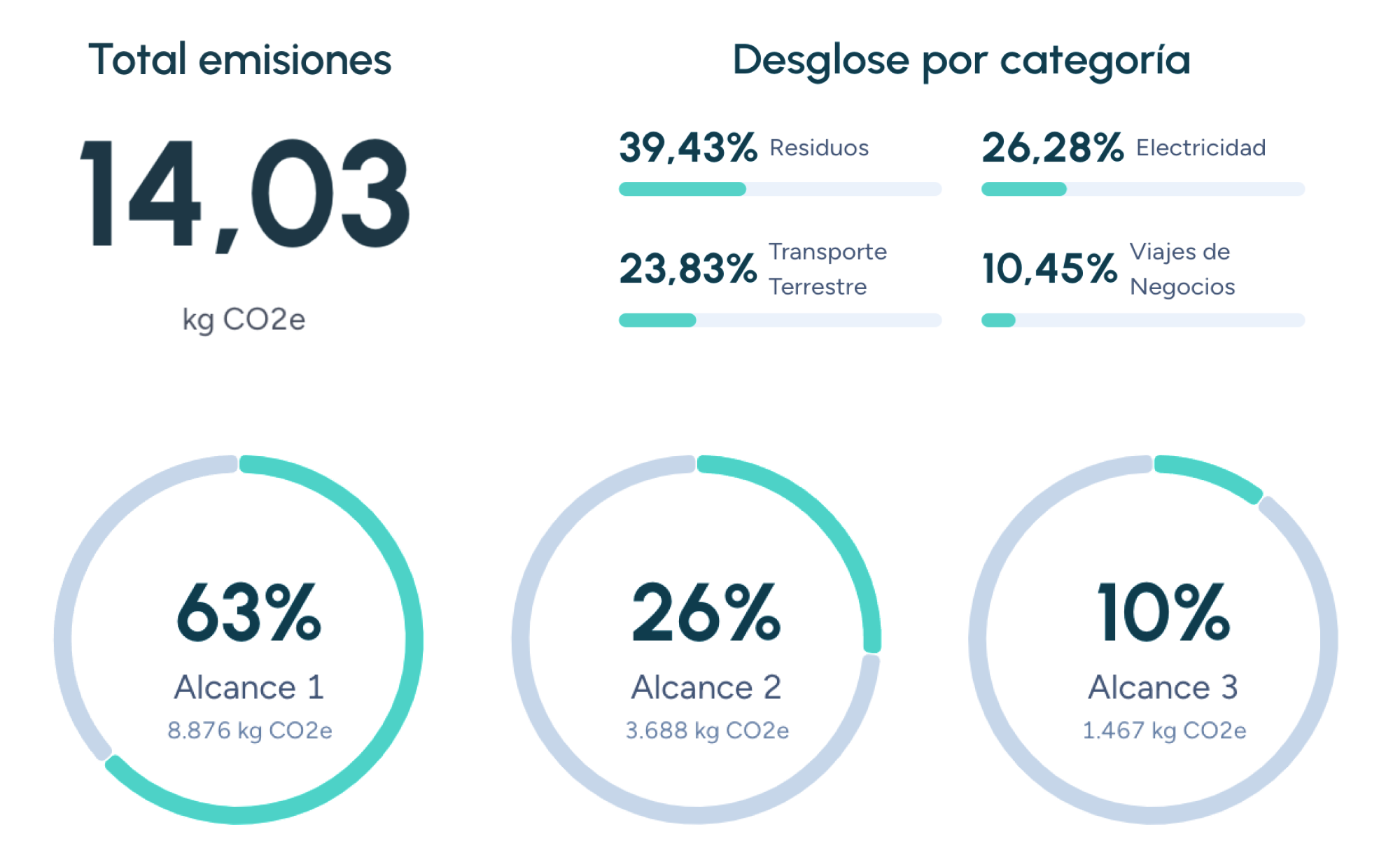
Measuring the carbon footprint is the quantitative foundation of climate disclosure. A reliable greenhouse gas inventory across Scope 1, Scope 2 and Scope 3 emissions lets a company identify its main emission sources, set credible reduction targets, gauge its exposure to transition risks such as carbon pricing, and communicate progress to stakeholders.
At Manglai we help companies measure their carbon footprint and prepare the climate data needed for IFRS S2 and CSRD reporting. Discover our corporate carbon footprint software.
Manglai Newsletter
Regulatory updates and product news, once a month.
Companies that trust us















Related terms
See all termsCorporate Social Responsibility (CSR)
What Corporate Social Responsibility is, its three pillars, why it matters to companies today, and how it connects with carbon footprint measurement and EU sustainability reporting rules.
Corporate Sustainability Report (SMV, Peru)
The Corporate Sustainability Report is annex (10180) to the annual report that Peru's Securities Market Superintendency requires from issuers listed on the Public Registry of the Securities Market. The current format was approved by Resolution 018-2020-SMV/02 and is filed each year with the annual report, due 31 March.
Double Materiality and CSRD
Double materiality is the principle that combines a company's impact on the environment with the effect of sustainability on its finances. It is the basis of the CSRD and the ESRS.