Environmental governance is the set of rules, policies, practices and processes through which public institutions, private organisations and civil society take decisions about the environment and natural resources. It is a foundational concept in the sustainable management of resources and the response to climate change.
As the climate crisis becomes a global priority, environmental governance acts as a critical pillar for securing sustainable development and reducing the collective carbon footprint. It is distinct from corporate governance (the G in ESG), although the two are closely linked: a company's internal governance determines how it engages with the wider environmental governance system.
What is environmental governance?
Environmental governance is the system of rules, practices and processes that guides the management of the environment. It extends well beyond government regulation, involving businesses, non-governmental organisations (NGOs) and citizens in environmental decision-making. Its main objective is to ensure that environmental decisions are transparent, inclusive and effective, through policies that promote sustainability, ecosystem protection and climate change mitigation.
Why environmental governance matters for climate action
Climate change is one of the greatest challenges of our time, and environmental governance is central to mitigating it. A well-structured framework lets different stakeholders coordinate to:
- Set clear emission reduction targets, such as those under the Paris Agreement.
- Encourage clean technologies and sustainable practices in key sectors like energy, transport and agriculture.
- Ensure transparency and accountability in environmental management.
- Promote public participation in environmental decision-making.
Key components of environmental governance
Effective environmental governance rests on four essential components:
1. Regulatory framework
The laws, regulations and international agreements that guide environmental management, such as the Kyoto Protocol and the Paris Agreement, which set commitments to reduce greenhouse gas (GHG) emissions.
2. Institutions and stakeholders
A diverse range of actors is involved: governments (policy and regulation), businesses (sustainable innovation), and NGOs and civil society (advocacy and awareness). Collaboration among them is essential to address complex issues such as deforestation, pollution and climate change.
3. Transparency and public participation
Transparent decision-making and active citizen participation ensure that environmental policies are inclusive and reflect the needs of society.
4. Technology and innovation
Technology increasingly shapes environmental governance, from monitoring systems to data platforms that let organisations track their environmental impact and build data-driven decarbonisation strategies.
Environmental governance and the carbon footprint
The carbon footprint is a key indicator in environmental governance, measuring the total GHG emissions associated with an activity, product or organisation. This data is essential for assessing impact and designing effective reduction strategies.
Measuring the carbon footprint
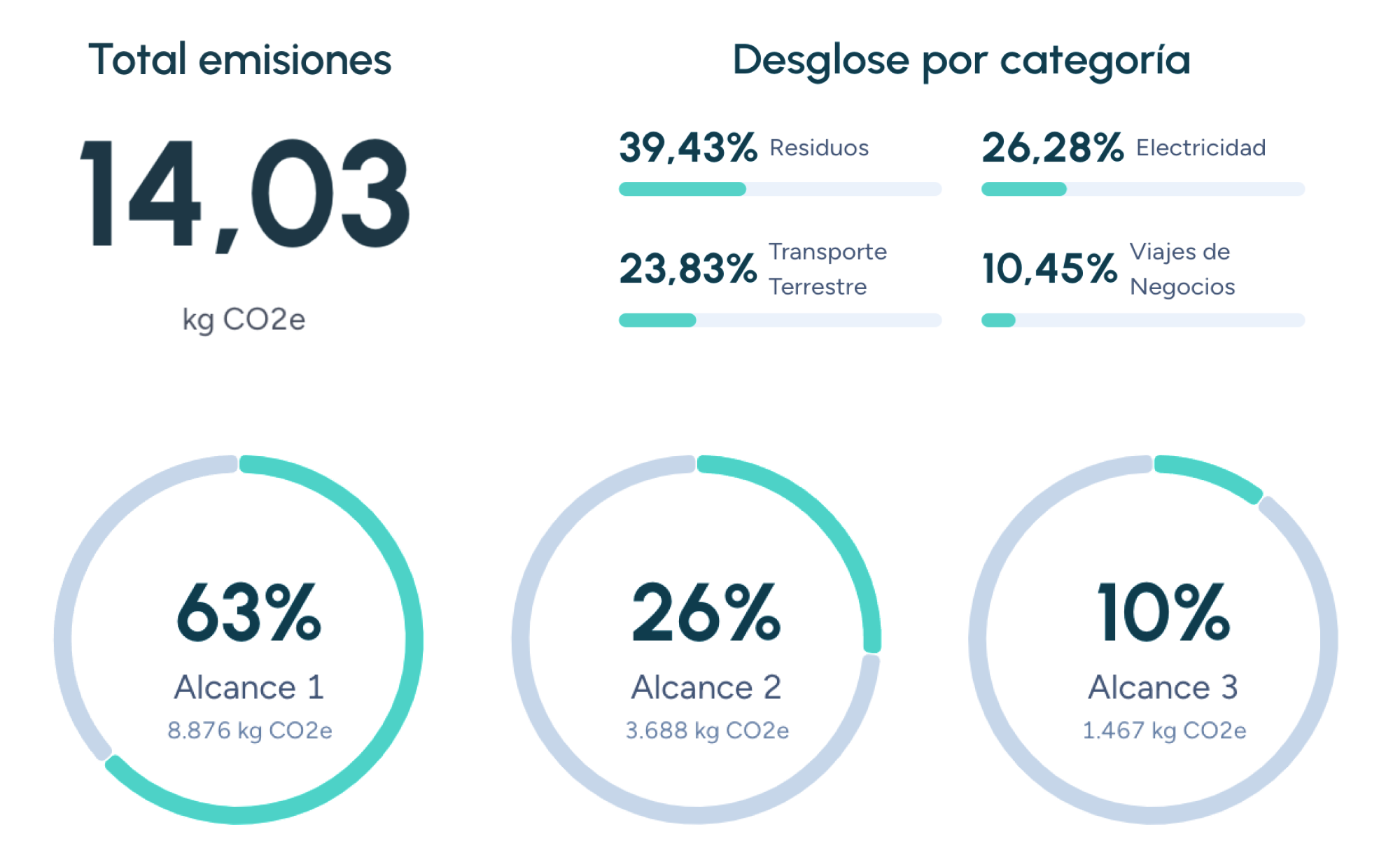
Measurement covers three scopes, as defined by the GHG Protocol:
- Scope 1: direct emissions from sources the organisation controls (for example vehicles and machinery).
- Scope 2: indirect emissions from purchased energy (electricity, heating).
- Scope 3: other indirect emissions, including value chain and product life cycle impacts.
Reducing the carbon footprint
Once emissions are measured, governance supports the rollout of reduction strategies, including:
- Adoption of renewable energy.
- Improved energy efficiency.
- Certified carbon offset projects for residual emissions.
Legal and scientific framework
Environmental governance is underpinned by a solid legal and scientific foundation. Internationally, the Paris Agreement and the UN Sustainable Development Goals (SDGs) set clear climate goals. In Spain, the Climate Change and Energy Transition Law (Law 7/2021) establishes ambitious targets, including climate neutrality by 2050. Scientifically, the Intergovernmental Panel on Climate Change (IPCC) provides the authoritative evidence base on GHG emissions and their effects on the global climate.
Environmental governance and Manglai
Environmental governance is a fundamental element in tackling climate change and securing sustainable development, integrating regulation, policy and innovation so that governments, businesses and citizens can act together. At Manglai we help companies measure, reduce and report their carbon footprint as part of that effort. Discover how Manglai can help you.
Manglai Newsletter
Regulatory updates and product news, once a month.
Companies that trust us















Related terms
See all termsEnvironmental responsibility
What environmental responsibility means for companies, why it matters strategically, and the tools and legal framework, from carbon measurement to Spain's Law 26/2007, that support it.
Extended Producer Responsibility (EPR)
What Extended Producer Responsibility is, how it is regulated in the EU and Spain, and how it connects to the circular economy and to reducing the carbon footprint of products.
Governance
Governance is the 'G' of ESG criteria: the set of structures, policies and controls with which a company directs its sustainability. Good governance is the foundation for measuring the carbon footprint and complying with the CSRD.