Fast fashion is a production and consumption model in the clothing industry that prioritises rapid, mass and low-cost manufacturing. It is designed to respond quickly to market trends, offering affordable and constantly updated fashion. While this has democratised access to clothing, fast fashion has a significant environmental impact, particularly through greenhouse gas emissions, water consumption and pollution, and the generation of textile waste.
What is fast fashion?
Fast fashion is a business model focused on producing clothing quickly and cheaply to meet demand for the latest trends. Its key characteristics are:
- Short production cycles, sometimes lasting only a few weeks.
- Inexpensive, low-quality materials, such as polyester and synthetic blends.
- Mass production in low-labour-cost countries.
- High volumes of textile waste due to the short lifespan of garments.
The environmental impact of fast fashion
Greenhouse gas emissions
The fashion industry is a meaningful source of greenhouse gas emissions, but published estimates vary widely with methodology and system boundaries. The UN Environment Programme works with a range of roughly 2 to 8% of global emissions, while academic work (Niinimäki et al., Nature Reviews Earth & Environment, 2020) and much of the press cite 8 to 10%. Treat any of these percentages as an order of magnitude rather than a settled figure. The main contributors are:
- Synthetic materials such as polyester, which depend on fossil-fuel-based production.
- International transport, as many garments are produced far from where they are sold.
- Energy-intensive dyeing and finishing.
Water consumption and pollution
Fast fashion has a major impact on water resources. Textiles are among the most water-intensive industrial value chains, largely because of cotton cultivation: a single pair of jeans can account for several thousand litres once the fibre stage is included. Dyeing and finishing generate effluent contaminated with chemicals that, without proper treatment, can be discharged into rivers and oceans. Measuring a company's water footprint helps quantify this pressure.
Textile waste
The short lifespan of fast fashion drives large volumes of textile waste. According to the European Environment Agency, each person in the EU generates several kilos of textile waste a year, and only a small share is recycled fibre-to-fibre into new garments; most is downcycled, landfilled, incinerated or exported.
Fast fashion and the carbon footprint
The carbon footprint measures the total greenhouse gas emissions associated with a product, service or activity. In fast fashion these arise across the entire value chain:
- Raw materials: extracting and manufacturing fibres (cotton, polyester).
- Manufacturing: energy-intensive dyeing and cutting.
- Transport: shipping from production countries to consumer markets.
- Use and end of life: washing and drying, plus incineration or landfill.
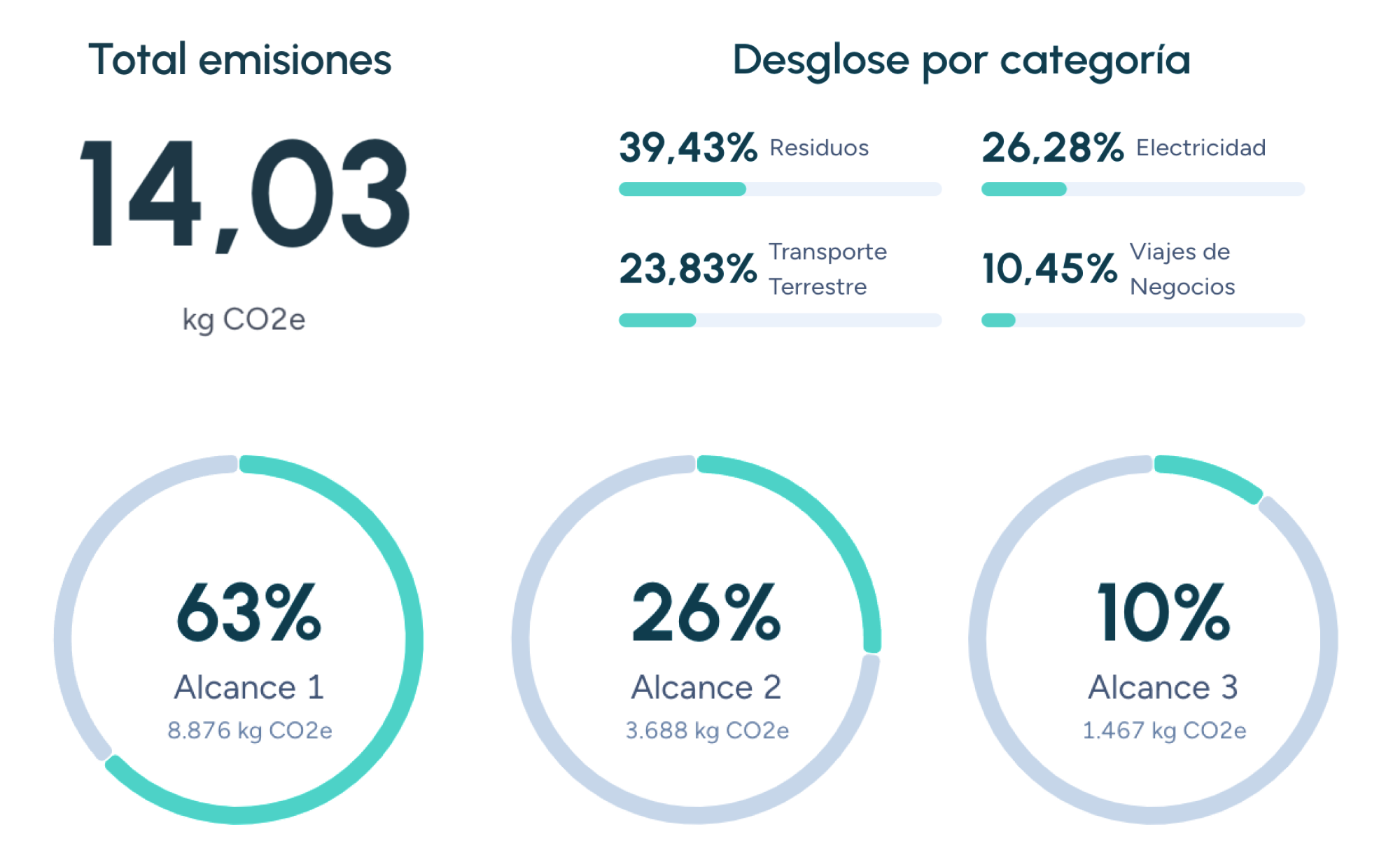
For most apparel brands, the bulk of emissions sit in Scope 3 (the supply chain), which is why measuring across all three scopes is essential.
Regulatory context in the EU
Europe is tightening the rules on textiles:
- Separate collection. The Waste Framework Directive has required Member States to collect textile waste separately since 1 January 2025.
- Directive (EU) 2025/1892 amends the Waste Framework Directive and introduces mandatory Extended Producer Responsibility for textiles and footwear, making producers responsible for the cost of collection and treatment. Member States must have the schemes running by April 2028, with a longer deadline for micro-enterprises.
- The Ecodesign for Sustainable Products Regulation (ESPR), Regulation (EU) 2024/1781, enables durability and circularity requirements and the Digital Product Passport for textiles.
- Directive (EU) 2024/825 on empowering consumers applies from 27 September 2026. It bans generic environmental claims without substantiation, sustainability labels that are not backed by a recognised certification scheme, and carbon-neutrality claims based on offsetting, which goes to the heart of collections marketed as conscious, eco or green.
Solutions to reduce the impact
The first step towards sustainability is to measure the environmental impact of operations across Scopes 1, 2 and 3, which makes it possible to identify hotspots and prioritise action. From there, businesses and consumers can:
- Use recycled or sustainably sourced materials.
- Adopt energy-efficient production processes.
- Promote garment reuse, repair and upcycling.
- Shift towards circular models such as rental and resale.
- Encourage responsible consumption and buy less, better.
Measuring and reducing the industry's footprint is central to climate change mitigation. At Manglai we help fashion and retail companies measure their carbon footprint and prepare their sustainability reporting. Discover how Manglai can help you.
Manglai Newsletter
Regulatory updates and product news, once a month.
Companies that trust us















Related terms
See all termsGlobal warming
Global warming is the sustained increase in the planet's average temperature driven by human greenhouse gas emissions. We explain its causes, effects and how to act.
Green Water Footprint
The green water footprint measures the rainwater held in the soil and used by crops and vegetation through evapotranspiration, the main form of water consumption in rainfed agriculture.
Greenhouse Gases (GHG)
Greenhouse gases (GHG) trap heat in the atmosphere and, in excess, accelerate climate change. We explain what they are, their global warming potential according to the IPCC and how to measure them.