Climate change mitigation refers to the actions and strategies aimed at reducing or preventing greenhouse gas (GHG) emissions, or increasing their absorption through carbon sinks, in order to limit global warming and its consequences. It is the complement of adaptation: mitigation tackles the causes of climate change, while adaptation manages its effects.
Why climate change mitigation matters
Mitigation is essential to slow climate change, a phenomenon with severe global impacts. According to the IPCC, human activities have already warmed the planet by around 1.1 to 1.3 degrees Celsius above pre-industrial levels. Without strong mitigation, impacts intensify, including:
- Rising sea levels
- More frequent and intense extreme weather (storms, droughts, floods, heatwaves)
- Loss of biodiversity
- Water scarcity
- Effects on human health
- Displacement and migration
Climate change mitigation measures
Mitigation can be implemented at every level, from individual to international.
Energy
- Transition to renewable energy: replacing coal, oil and gas with solar, wind, hydro, geothermal and sustainable biomass.
- Improving energy efficiency: cutting consumption with more efficient technologies in buildings, transport and industry.
Transport
- Public transport: encouraging trains, buses and other efficient systems.
- Electric and hybrid vehicles: reducing road transport emissions.
- Sustainable mobility: promoting active travel and shared vehicles.
Industry
- Technological innovation: cleaner, more efficient industrial processes.
- Circular economy: reducing resource use and waste through reuse, recycling and recovery.
Agriculture and land use
- Sustainable agriculture: conservation agriculture, agroforestry and improved livestock management.
- Forest protection and reforestation: preserving forests and planting trees to increase CO2 absorption, a form of nature-based solution.
Buildings
- Sustainable construction: energy-efficient design with low environmental impact.
- Energy retrofitting: upgrading heating, ventilation, cooling and insulation in existing buildings.
The role of the carbon footprint in mitigation
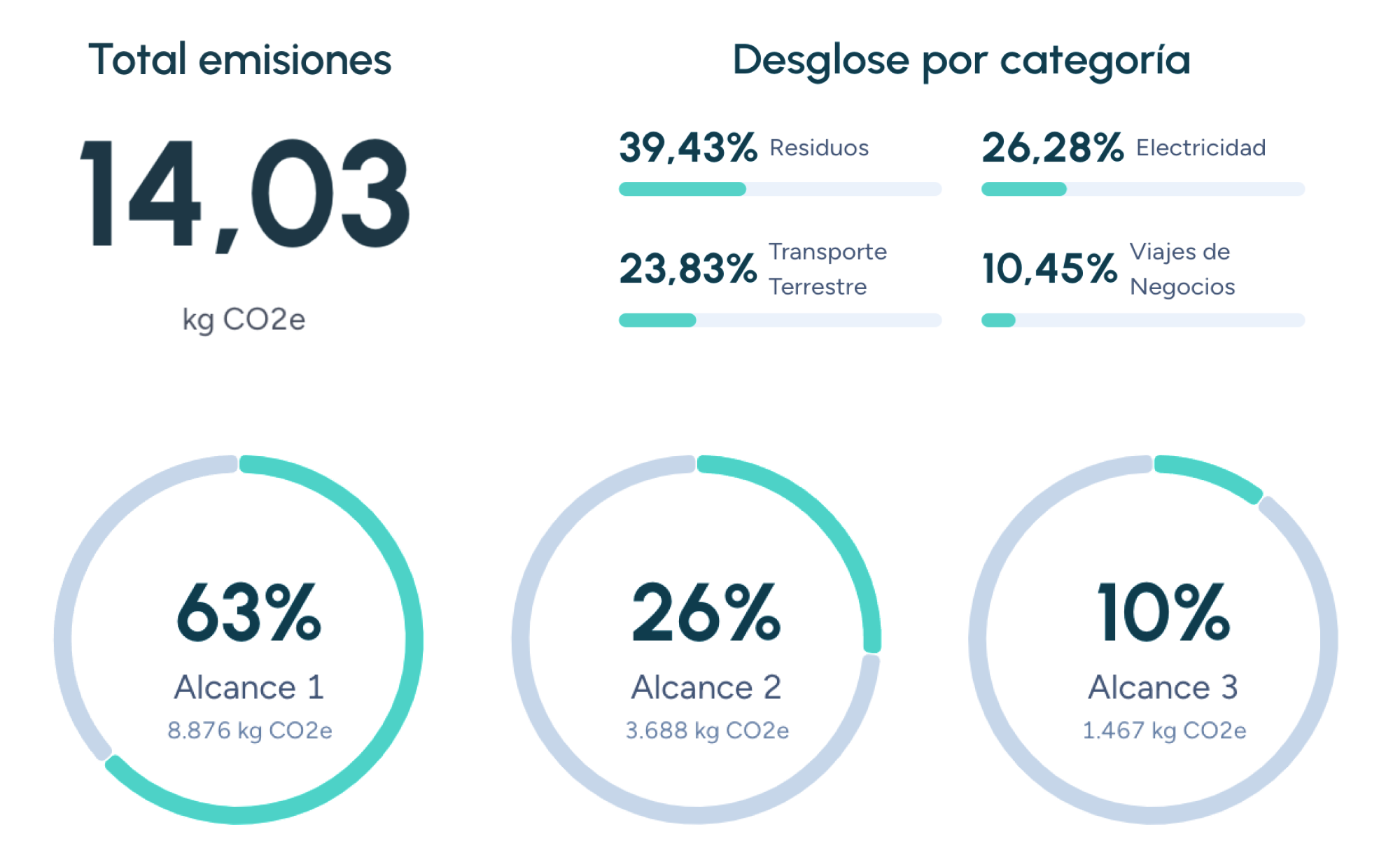
Measuring the carbon footprint is fundamental to mitigation. It lets organisations quantify their GHG emissions, identify major sources and design reduction strategies. Calculations usually follow the GHG Protocol, covering Scope 1, Scope 2 and Scope 3. Once known, the footprint helps to:
- Set reduction targets, increasingly aligned with science-based targets.
- Monitor progress and evaluate the effectiveness of measures.
- Communicate climate commitment credibly to stakeholders.
International agreements and mitigation policy
The Paris Agreement (2015) aims to keep the global average temperature increase well below 2 degrees Celsius above pre-industrial levels, pursuing efforts to limit it to 1.5 degrees Celsius. Signatory countries submit Nationally Determined Contributions (NDCs) setting out their mitigation plans. It builds on the earlier Kyoto Protocol. Notably, the United States withdrawal from the Paris Agreement took effect in January 2026, although most major economies remain committed.
Countries and the EU also deploy policy instruments, including:
- Carbon pricing, such as the Emissions Trading System and carbon taxes.
- Renewable energy incentives through subsidies and tax measures.
- Emission regulations setting sectoral limits, framed in the EU by the European Green Deal.
Climate change mitigation is a global challenge requiring action from governments, businesses and individuals. Measuring the carbon footprint is the essential first step to understanding impact and reducing it. At Manglai we help companies measure their carbon footprint and prepare their sustainability reporting. Discover how Manglai can help you.
Manglai Newsletter
Regulatory updates and product news, once a month.
Companies that trust us















Related terms
See all termsClimate neutrality
Climate neutrality means balancing the greenhouse gases a company or economy emits with the amount it removes, reaching a net-zero impact on the climate across all GHGs.
Climate resilience
Climate resilience is the capacity of natural, social and economic systems to anticipate, withstand and recover from climate impacts. A guide for companies building it.
Climate transition plan
A time-bound action plan that sets out how a company will align its business model with a 1.5°C and net-zero pathway.